Sunday, 1 March 2026

There is still no good adaptation of Wuthering Heights

One of us has seen almost all versions of Wuthering Heights (bar the 2011 film) and while the book by Emily Bronte isn't one of our favourites, it is a seminal work in Western literature. It is one of the earliest, if not the earliest work written by a Western woman that handles domestic abuse, otherization and cycles of violence and trauma. Now, we went in to watch Emerald Fennell's version of Wuthering Heights with the expectation of it being a bad adaptation. We were, of course, right. Because there is no possible way to make a 14-year old posh white girl's fever dream of Wuthering Heights good. This is what the director herself advertised the movie as, so she didn't even try to update her teen girl fantasy she had of Wuthering Heights. It is utterly ridiculous that an adult woman infantalizes a book written by a talented 18-year old by making the novel into a worse version of a Harlequin and then is infantalized in turn by her own fans who try to defend the monstrosity that she created by claiming criticizing Fennell is anti-feminist. There is always a strand of misogyny in criticism against women creators because we live in a patriarchy, but that should not deter thoughtful criticism of women creators' works. Because unfortunately, women can also uphold patriarchy and want to advance in a patriarchal structure. That is not to say, however, that there is anything wrong with your moral character for liking this movie or you're anti-feminist for liking it. We like Fast & Furious - films, so who are we to judge? We will, though, be pretty brutal when dissecting why this version of Wuthering Heights is probably the worst adaptation of the source material and why it doesn't even work as a decent mindless fluff for us.


Even this poster looks more like Gone with the Wind than Wuthering Heights. (Pic: Wikipedia)


Positives

There aren't many. We get if you like the visuals in this film, there are lots of beautiful shots in this one. The costumes can look extravagant and lush, with few flubs here and there. Set designs, including the moors, also work fairly well in the film. The music, when they use more traditional style English folk songs, would probably fit even in the novel.  


Gripes

This is gonna be a long one. We'll number them purely for our benefit, the first ones in order of importance.


1. Heathcliff is white. Racists can say whatever they want and try to justify the numerous passages in the book that clearly state that Heathcliff isn't white. The very first introduction we get for Heathcliff describes the man as - "Mr. Heathcliff...is a dark-skinned gypsy in aspect, in dress and manners a gentleman". In other words, a Romani type. There is also a scene where characters speculate about Heathcliff's origin - wondering if he's a castaway from India, Americas (during that time probably meaning the Caribbeans/West Indies that Britain owned) or Spanish colonies. Mr. Earnshaw, Catharine's father, also found Heathcliff from Liverpool, the port city that the slave trade went through and was used to bring British colonial subjects to Britain. Then there is the passage where young Heathcliff laments to Nelly the fact that he does not possess light hair and fair skin like Edgar Linton. And one has to wonder after hearing this, why would Nelly comfort Heathcliff with a story that maybe Heathcliff's unknown father was a Chinese emperor or mother an Indian queen? Why did Nelly use racialized countries' royalty instead of European, if Heathcliff is white? All this is not negated by a scene that racists love to use to defend their argument that Heathcliff is white - where it is described that Heathcliff's face pales to the colour of the wall. What wall are we talking about though? This specific scene takes place in Wuthering Heights, the abode of childhood Catharine and Heathcliff. Why would anyone assume that the walls there are white? These walls are not described in any manner, so they could really be any colour. You don't have to be white for your skin to pale from shock, either. Need we also remind people, "pale as a ghost" is an expression and not the literal meaning of the phrase. The otherization and horrific abuse that Heathcliff faces is in huge part because he isn't white. It is a pretty damning indictment of the posh white director that she could not imagine a non-white person being a tragic romantic male lead. Most previous versions raceswap Heathcliff as well (except the 2011 one), but you'd think that in the year 2026 we'd know better. Whitewashing Heathcliff (both his skin colour and character) is an insult to the themes, character narratives and purpose of the entire story. 


2. The abscence of Cathy jr. and Hareton. These two characters are the other main characters of the book, with Cathy and Heathcliff being the focus in the second act, and Cathy jr. and Hareton (Hindley's son) taking the stage in the first and third acts of the novel. Cathy jr. and Hareton are the vessels of the story's main conclusion - closing the loop of generational abuse and trauma and how to start healing from it. Also, they are allowed to be the healthy version of Cathy and Heathcliff - they retain their wildness of character, while freeing themselves from abuse and prejudice. This was not possible for Heathcliff and Cathy, because of external factors like class and racism, trauma bonding between Cathy and Heathcliff that turned into obsession, and because the two dudes in Cathy's life just would not accept that Cathy loved them both and instead wanted her to choose one of them.


3. Making domestic abuse a kink. Isabella, who marries Heathcliff, is basically turned from a domestic abuse victim into a BDSM kink enjoyer. There is no moment in the book where it is even hinted that Isabella would enjoy pain of any kind and the abuse she faces from Heathcliff is severe (he throws a knife at her when she's pregnant and it is implied that he rapes her). This depiction is a degradation of both domestic abuse victims and BDSM community (who are consenting adults enjoying specific intimate kinks). We can understand that a white person might be hesitant to show a non-white man being abusive to a white woman because so often that is done for expressly racist reasons, but the whole point of Heathcliff's character is that he perpetuates the abuse he received, partly because of his "other" status, against people close to him. But why then is  Edgar and Isabella's relation changed - because Edgar is swapped from white to brown (which is what Heathcliff would've been originally) but Isabella is then no longer his sister but his ward? Could it be that they also didn't want to depict a non-white woman being abused by a white man, especially by the supposed "romantic hero" of the story? It is funny that this version claims to be so shocking and controversial, but then it cut out all the controversial and shocking parts of the book (like Heathcliff hanging Isabella's dog on their wedding night or digging up Cathy's dead body and lying next to it) because the director didn't want to break her image of Heathcliff as a dashing romantic hero, and instead replaced these parts with tame milquetoast affair drama.  

Pic: ELLE Canada


4. Combining Hindley (Catharine's brother) and Mr. Earnshaw (the father). Hindley is the main tormentor of both Heathcliff and Cathy as children and Hindley especially hates Heathcliff, because he believes that his father loves Heathcliff more than him and thus he beats Heathcliff mercilessy throughout their childhood. He also calls Heathcliff racial slurs and the old servant Joseph eggs Hindley on because he believes that Heathcliff is the devil because he does not look like the rest of them. Joseph also has some weird racial religious ideas in his head that make him pretty much worship Hindley (and later Hareton) as a master race type being. All the children, Hindley, Cathy and Heathcliff are pretty much emotionally neglected by their father but Heathcliff is the only one who suffers physical abuse from Hindley. This abuse fucked up Heathcliff for the rest of his life and led to his spiral of continuing the abuse towards anyone he felt was responsible for his misery. The father in the film is barely in it and he only abuses Heathcliff once when they are children, after that it's like the abuse is surgically removed from the story because it's never mentioned, referenced or shown again. It almost feels like the filmmaker was not at all interested in exploring the themes of abuse and trauma in the book by removing Hindley's character or not making the father constantly abuse Heathcliff. 


5. Nelly being an antagonist. Jesus, if there was not a clearer sign that this movie was made by a rich white lady, it is the changes to Nelly's character. First of all, it's ridiculous that they decided to make Nelly the main antagonist in this story when the book doesn't really have villains in it. The closest to a villain we get in the book is Hindley, and even his violent behaviour while not justified, is explained by him feeling inferior to Heathcliff while simultaneously seeing him as an "other" stealing his father's love. This violent behaviour is then something that Heathcliff perpetuates toward people he perceived hurt him. Also, why is Nelly the racialized "other" in this version? They basically made Nelly into Heathcliff in this movie, because she is the one who is vengeful and resentful towards Cathy instead of Heathcliff. This version destroys all of Nelly's growth in the novel, where she starts off as judgmental and prejudiced and ends with her having compassion and understanding for Heathcliff who she had not loved the same as Cathy and Hindley, but then in the end sees Heathcliff the same as them - as her family. In addition, we are far too socialist to accept the framing that a servant would have any power over people with titles and lands.    


6. The relationship between Cathy, Heathcliff and Edgar is misrepresented. Cathy loves both Heathcliff and Edgar. This is something that is missing from every adaptation and from the general discourse about the book. Both Heathcliff and Edgar do not accept Cathy as she is - her wildness but also her desire for comfort. Edgar cannot accept the fact that Cathy loves Heathcliff and Heathcliff cannot accept the fact that Cathy loves Edgar. All three are laid to rest next to each other. It was fairly clear when we read the novel that this love triangle was inspired by Guinevere, Arthur and Lancelot. They could have been a happy polycule if not for the times and the men's inability to let go of their egos. This version really destroyed both men's characters by making Heathcliff Cathy's one true destined love and Edgar just some dude who is in the way of these star-crossed lovers. Wuthering Heights is not Romeo & Juliet and most people also misunderstand that story, so no wonder this movie ended up the way it did. It's hard not to think that this film was not a self-insert by making Heathcliff basically the sole love interest and turning Cathy blonde instead of the brunette that she was in the book and every single other version.

Pic: IBTimes UK


7. This movie does not work even as mindless fluff. We were advertised that this film would be a shocking smutty gothic erotica, and yet all we got was some barely shown vanilla sex scenes (seriously, there's nothing to see) and the BDSM kink is only hinted at, we don't actually get a sex scene with this BDSM - theme. How disappointing and tame. Even Bridgerton's 4th season had hotter sex scenes. Honestly, it would have been far more shocking to show these characters as the flawed people they were doing some horrific shit. The director could have even leaned into the incestuous theory of Cathy and Heathcliff being half-siblings and go full Game of Thrones on it. Or hell, if you wanted a truly shocking aspect in the story, how about necrophilia? And yes, it is a reasonable intepretation from the novel that Heathcliff doesn't just lie next to Cathy's corpse. Also, where are the damn ghosts and supernatural elements in this movie? The film does look beautiful, but even that is more like somebody took individual photos and arranged them into a display rather than having a smoothly flowing film. There is zero chemistry between the leads and aging up the leads did a huge disservice to the characters, because ain't no way late 20's and early 30's people act like teenagers. Since the movie does not bother to really build any relationships or study characters deeper, all you get is a pretty picture and nothing else. It is fine to like a pretty picture but let's not pretend that it is anything more. If you want some brainless steamy smutty destiny love fluff with colorblind casting, Bridgerton's latest season works way better than anything in this movie. And we saw a better period piece love story with supernatural elements just recently - Hamnet. Go watch that instead.      

Sunday, 17 August 2025

Superior adaptations

Adaptations that surpass their source material are few and far between. Occasionally however, some manage to improve their origin. Here is a list of our favourites that we argue end up being better than their source material.


1. Trigun (1998). No contest. By far the best improvement to any manga that we have seen. The original manga is rather convoluted and messy at times. The women especially are completely wasted in the manga and get no narratives of their own. The series takes the main idea of the manga and the designs of the characters and morphs it into something simpler but way more effective and character driven. The women also get more meaningful character arcs and personalities in the show. The climax of the anime packs such a punch that the manga is left in the dust. All in all, a superior adaptation in almost every aspect.


Pic: The Movie Database


 2. The Painted Veil (2006). The book ain't worth it. We saw the film before reading the novel, and thus had very high expectations, which the book definitely did not live up to. The ridiculously misogynistic conclusion and the complete erasure of the female character Kitty's character narrative in the novel was an absolute insult. In the end, the book was clearly written by a man of his time, so no surprise there. The movie works better both character and romance wise.


Pic: Flixchatter


3. Oldboy (2003). Superior to the manga in every way. Truly, every single decision they decided to change for the film from the manga is better. The twist was so goddamn stupid in the manga that for once the far more shocking and overused trope as plot twist in the movie works for the film's benefit.  


Pic: FilmAffinity


 4. The Departed (2006). Like Trigun's manga, the original version of this movie, Infernal Affairs, is fine. There's nothing wrong with them. It's just we think that Scorsese knew how to make a more compelling story with focus on characters. For us, the original is more plot driven and thus comes across less interesting whereas Scorsese's film is more interested in characters and their narratives. Also, never did we ever think that Scorsese could actually do a somewhat decent female character, this was a first for his films. It works surprisingly well that the remake decided to combine the two basically unimportant female characters from the original to one impactul character with their own arc.


Pic: The Movie Database


 5. Koe no katachi/A Silent Voice (2016). Again, nothing really wrong with the source material but the anime just works better. The pacing, the characterisations, the focus on the two main characters gives the story more direction and keeps the movie more focused.


Pic: Wallpaper Flare


6. The Secret Garden (1993). The book is genuinely good. It just doesn't feel that the children are quite like real children in the novel as they are in the film. The movie has the children act like actual kids would and thus also make the ending far more touching when the film has made you really care about these children.


Pic: Roger Ebert


 7. Howl's Moving Castle (2004). This might be the only case where we also really enjoy the source material. The novel is super funny and engaging. If the film was made by anybody else but Miyazaki, we doubt it would've improved stuff from the book as much. Since it is Miyazaki however, he manages to keep the humorous spirit of the book while deepening the characters and giving them more defined narratives.


Pic: Fanpop


8. Tarzan (1999). This book goes to the same pile as many other dude writers of his time - sexist and shallow. Not to mention super racist. The novel is quite clumsily written and there's barely any character narrative to be had. Disney, surprisingly, manages to improve on both the story and characters. Tarzan has to actually grapple being part of two different worlds and Jane gets a gigantic character transformation from the book. The animation is a guilty pleasure, hence it's lower placement.


Pic: Imdb


 9. Nosferatu (2024). The OG film is an undisputed classic. Many also are fond of Herzog's version from the 70's. If one has read the book which all these versions are based on, we gotta admit however, that the Eggers film is the best adaptation of the orginal story's themes and characters. For once the female character is not a love interest to her predator but is shown as a victim of sexual abuse. The movie makes her death meaningful as well by making it her own choice, instead of virginal sacrifice or completely irrelevant. It also improves the book's more clunky writing and tones down the uberreligiosity of the story.   


Pic: Screen Rant


10. Bleak House (2005). The novel, again, is fine. The main character is just so insufferably angelic that she feels unreal. The series keeps her goodness but gives her more humanity. It immediately makes her a more compelling character. The show also condensed Dickens' ramblings and more convoluted parts of the book. 


Pic: Imdb


Saturday, 11 January 2025

Pick of the month

 Green Border (2024)


                                                          Pic: Kino Engel 

This might be the most important film of last year for people to see. Especially for people in Europe - and also USA, considering how immigrants have been talked about/treated both in US and Europe. The country we live in decided to basically shut our borders from those pesky brown people as well, so this movie is an accurate portrayal of how our country and the rest of Europe will come to treat refugees and immigrants in the near future. The film is overtly political and one of the best depictions of political art in memory, no doubt in part because of Agnieszka Holland's biting commentary and expert direction. It is heartbreakingly prescient and looking at the constant destruction that Western nations are causing in the Middle-East and Africa (whether by bombs and invasions, economic sanctions and blackmail through the IMF, or propping up these countries' dictators) the flow of migrants and refugees to Western nations will continue for the foreseeable future. The movie also shows how easily people are swayed by racist propaganda and animosity towards muslims in particular. The story is a bleak and realistic account of refugees' and immigrants' travel to Europe and the absolute inhumanity they face at Europe's borders. You see this inhumanity in the end also affect negatively the people acting inhumane towards the immigrants. With all the bleakness however, also comes hope in the form of people willing to help - a widowed therapist letting the young activists use her house as a base to bring people in, activists going to where the refugees and immigrants are in the woods and helping them, or a frustrated family man who cannot abide the government's fascist rule opening his home for refugees. All in all, this film wants you, the viewer, to see these people, these brown and black people, these muslims, as fellow human beings in pain and suffering, instead of some invaders coming to take your life from you. Otherwise, if we fail to see refugees and migrants as human, all of our borders will, in the end, turn into graveyards.

Friday, 21 June 2024

Disney, presently

This next one is a real doozy. One of us had seen it before, but forgot it almost immediately after and the other one was less than enthusiastic to watch the animation. It could be said that Disney's offerings for most of the 2000's tried to copy Pixar, which itself copied anime and especially Miayazaki. Atlantis: The Lost Empire is no exception. 


Atlantis: The Lost Empire (2001)


Painfully directionless and the paper thin characters didn't help. But we'll delve more into those aspects down below.


Characters

It is nigh impossible to make this, because none of the characters differ from each other significantly. They try to establish the base line for the characters but you come out of this movie remembering absolutely nothing of the people in the film. So this'll be very "bare bones" character outlines.

Milo: He's an explorer. They hired Michael J. Fox as his voice, so that we'd automatically connect the character with sense of adventure, naivety and youthful curiosity. The problem is, the voice alone does not a character make - you actually have to write one. The dude also has no character arc to speak of, so for once Disney did to a male main character what they've always done to their female characters. Progress?

Kida: She's even worse than the main character, so we guess the progress is thus nullified. Kida is there to be the dark-skinned exotic object of romance. Her role as the saviour of her people is also basically anime's "magical girl" character, except it isn't even her but a blob of power she has morphed into that does all the saving. There is no evidence that she was ever conscious while the blob did the whole saviour stuff. Also, Kida is probably the most egregious example of Disney sexualizing their women, she doesn't even get pants like Jasmine, a long skirt like Esmeralda or a one-piece like Pocahontas. All she gets is shreds of clothes to show as much skin as possible.

The crew: They're pretty forgettable but also they're the only ones with any kind of character arc and purpose when they turn against their villainous leader. Other than that, they're basically indistinguishable and they've clearly been modeled after Miyazaki's pirates but without their humour and hearts of gold. And the villain is a ridiculously bland "surprise baddie", he doesn't even get Clayton's obvious villain vibes that make him somewhat entertaining. This film basically started Disney's villainous characters' downfall  - as in they become bland as fuck, there is no pizzazz, charisma, entertainment or humour in any of them.


Story

Atlantis: The Lost Empire has somewhat similar themes to Pocahontas - discovering a new world, greedy mercenary wants to take advantage of the culture's technology and the main character is fascinated by the new culture and it's female member. Except this movie manages to be even more offensive than Pocahontas - it's the white main character who teaches Atlantis' natives how to read their own language and use their technology. You couldn't be more white saviour if you tried. We suppose that's why the filmmakers had Kida save the city in the end, but as said previously, it wasn't really her who saved the people, it was an unconscious mass of power. Since we do not care one iota of the characters, the plot feels incredibly draggy and the finale's deus ex machina does not make the story any better - at least anime's magical girls use their powers of their own will and are conscious when doing it and if not, that usually means something is terribly wrong which the story then explores. None of that here, Kida is just a vessel and nothing more. Also, the fact that the main character has more chemistry with a damn teenager tells how half-assed the romance really is.


Miscellanous

The CGI is incredibly distracting. A lot of the designs are cool and quite unique but the horrible hamfisted CGI either distracts you from them or outright blots them out. Music is also rather forgettable. There is a reason Disney movies are remembered for their music - it is a way to tell a story without dialogue and memorable songs that are used in the background as themes was for the longest time Disney's bread and butter. Once you take the songs away there is only a skeleton left. The colours still look great and yes, we prefer 2D animation infinitely more than CGI, even when it is an abject failure like this one.   


Sunday, 31 March 2024

Losing our religion

This is a list for all the atheists and agnostics (and maybe even for nuanced believers as well) out there to celebrate the Easter holidays. Leaving religion behind can be painful, hard and scary, especially so for high-demand religion. These films and tv-shows have helped us process some of the trauma we have from religious dogma, even if some of these movies might not have anything to do with organized religion at first glance.


1. Dogtooth (2009). This film is a perfect example of the infantilization many high-demand religions inflict on their followers. It's got everything one might face in a cult- childhood indoctrination, patriarchal figure you must obey, boys are valued more than girls, women exist for the sexual gratification of men, gaslighting and straight up lying and distortion of reality. Is it any wonder it made the top of our list? Also, it is Lanthismos, so the whole movie is just weirdness incarnate.  


2. Spotlight (2015). Our righteous fury movie. This is the one you watch when you wanna have some catharsis over the fact how many religious organizations simply just allow child sexual abuse to happen and even go so far as to cover it up, and do absolutely nothing to bring the culprits to justice. The scene with Mark Ruffalo's character exploding over the church hiding the abuse is the definitive point for us in the film - what happens when a religion, that you have always thought was a force for good, is actually commiting atrocities and trying to actively hide them, from not just their members, but the world.


3. Holy Spider (2022). Women's oppression by fundamentalist religious doctrine is something that many religious organizations take part in - we come from one as well. This film depicts the violence that women face in high-demand religions - how strict rules of dress, behaviour and women's role in the religion (mainly only allowing women to have certain jobs or staying at home) are forced on women and girls. Neither do women have any kind of power in these kinds of religions - their only status is to be a wife and a mother.


3. Silence (2016). Scorsese has some real philosophical ponderings about God, faith and doubt. He wonders what does it mean to have faith, how does one cope when it seems God is not answering in your greatest hour of need, are you still a believer if you are forced to renounce your faith publicly but still believe in your heart? This is a movie that would still allow those, who have left religion, to have some belief in higher power and also makes the case that there can be no faith without doubt.


5. Through a Glass Darkly (1961). One cannot have a list about films to do with religion without Ingmar Bergman. The man has always been interested studying religious philosophy through the medium of cinema. We truly appreciate the way Bergman looks at religion - not as something sacred but neither something evil. He sees religions more as philosophy, something that tries to give answers to the meaning and purpose of human life and death. He can also be critical of especially Christian ideas of knowing God is real and how God allowing suffering is good - Bergman himself is very conflicted about these things. In this film particularly one could argue Bergman connects the main character's religious fervour to worsening her mental illness that prevents the main character from healing. 


6. Malcolm X (1992). His relationship with Nation of Islam in the movie is the most relevant part for this list. The fact that Malcolm X actually believed the women and his wife about the abuse his religious leader was perpetrating and that started his journey out of the cult, is something that many ex-religious people can relate to. Because if you close your eyes from the wrongdoings your religious organization is commiting, how religious can you really claim to be? The film also expertly portrays the hero worship that exists in cults in general.


7. The Handmaiden (2016). Leaving a cult can be such a freeing experience and here especially throwing away restricting gender norms bring actual freedom - you don't have to hide who you are or who you love (true for every queer person ever). This has another rage catharsis moment of the two women destroying the porn library of the perverted owner dude. Seeing yourself as a human being who has worth purely just as a human instead of a sex object for men is one of the major themes we love about this story. Since religions so often see women as lesser than men and heavily repress any kind of different expressions of sexuality, that leads to women being turned into "guardians of virtue" for men - women are culpabale of men's sexual desire and must always be available for men sexually. Something that this movie completely rejects and is one of the reasons we adore it.


8. Neon Genesis Evangelion (1995). The only series on this list. We've got an emotionally abusive father who only cares what his son can give him, children being indoctrinated into soldiers, adults constantly demanding emotional labour from children they're not equipped with, massive depression from the pressure to be perfect, identity crisis and crashing of your worldview. Quite accurate summary of plethora of high-demand religions. This is almost like a companion to Dogtooth, where the adult children are infantalized, whereas in Evangelion the actual children are forced into an adult world. There's plenty of religious imagery to boot.


9. Jojo Rabbit (2019). Extreme political ideology and extreme religious dogma are not that far from each other. In fact, they often merge. In this film the whole idea is that you are confronted with a person from a group your leaders have demonised and you start to realise that maybe they not only lied about this but also other things. Thus, the questioning of your own beliefs starts - the process of starting to think about things on your own instead of following what somebody else is telling you.


10. Music Box (1989). This film is here for the realization that your religious leaders weren't the actual saints they were painted as. Nay, not even saints, but truly human monsters in some sense. And the religion we come from, we were taught from a small age that the leaders of the church are like family - they're your fathers and grandfathers. So yeah, a movie that shows how your own father that you have loved and respected your whole life, turns out to be a war criminal, is something that really hit us hard. In a lot of high-demand religions it is quite often taught that your family is everything - so what does one do when it is one's own family that is the abuser, the criminal, the oppressor? Religions also teach the principle of forgiveness, but this can unfortunately lead to toxic family members or perpetrators thinking that they can just continue their abuse.


Honourable mentions: Any Ingmar Bergman (The Sevent Seal and The Virgin Spring, for example), Under the Banner of Heaven (for its obvious Mormon connections), The Truman Show (for the American ex-religious especially), Hinterland (corruption of leaders and thus the entire organization), Barbie (you wake up and realise you're not the same as everyone else) and Thirst (religion and the suppression of sexuality).

Sunday, 5 November 2023

Pick of the month


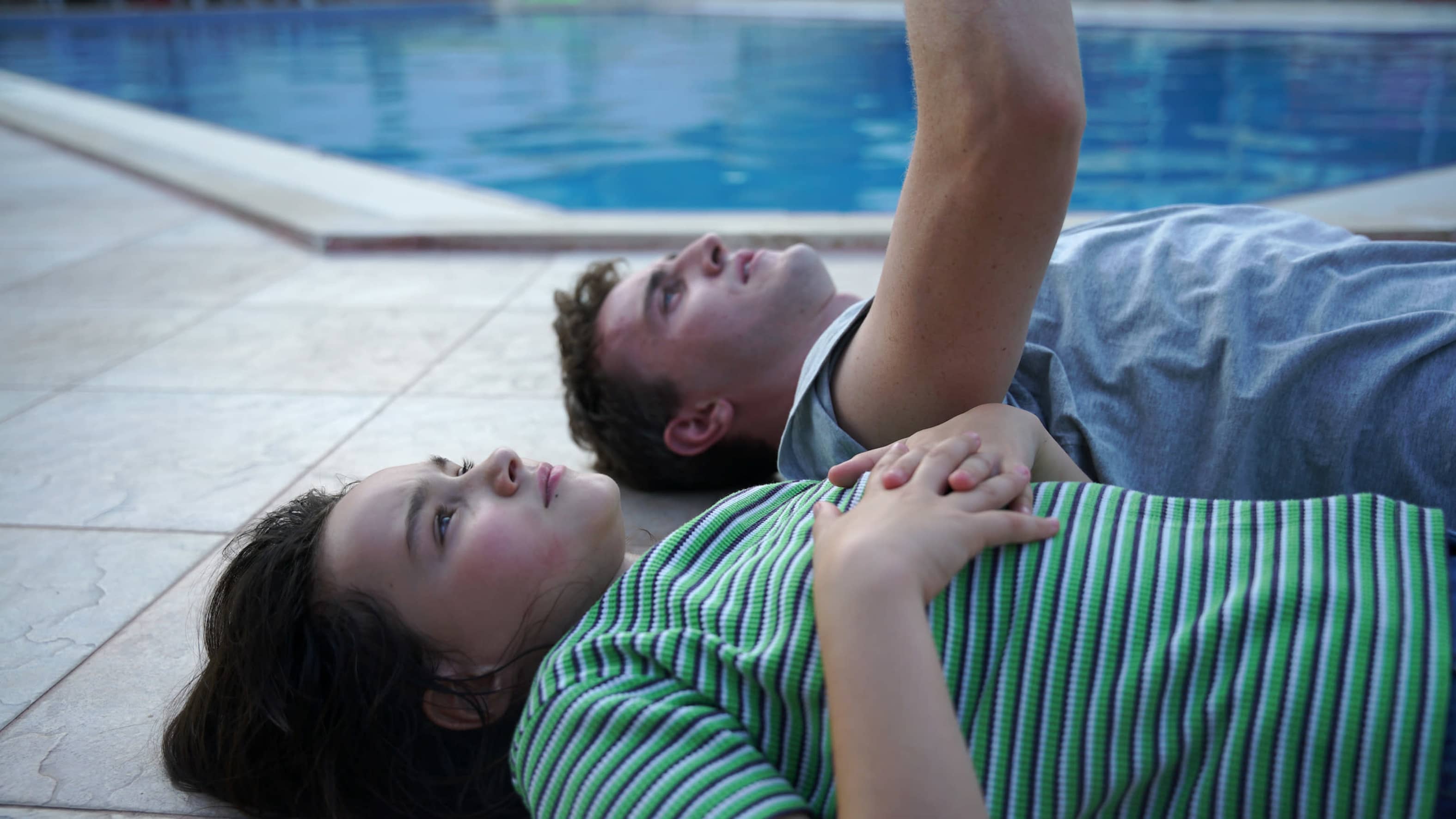
 Aftersun (2022)

Aftersun (2022) - IMDb


 This is one of the best directorial debut films we've ever seen. The directing is so damn subtle that you would never think this was done by a first timer in full-length feature film category. The movie uses visual cues expertly to build up to the finale of the main character girl's relationship with her dad. The music plays a huge part in the climax of the film and even though it's a very popular song, the movie edited it in a way that brought out the bittersweetness residing in the music to the surface and related it to the characters' struggles. The focus on water and reflective surfaces highlight the themes of recollection, memories and introversion. All in all, the film is a visual feast, one of the best dramas in a long time and surprisingly short in its runtime.


Tällainen on valtaisan kiitelty Aftersun-elokuva, joka on osa hittileffojen  uutta aaltoa | Yle Uutiset


The actors are also absolute top notch. If we had seen this one sooner, Paul Mescal would have definitely gone to win a best actor in our award list. The girl, Frankie Corio playing Sophie, was phenomenal. Not since The Impossible have we seen more natural and convincing child acting in a dramatic role. The father-daughter chemistry is palpable and no doubt part of it is inspired from the director's own experiences with her father. This movie deserves everything possible, so please rent it or buy it to at least signal that films like this are popular and worth being made.    

Sunday, 30 July 2023

The Barbenheimer

We're shamelessly taking advantage of the event called Barbenheimer. These two movies we were interested in from the start, since it's been forever that a decent comedy has seen the light of day in Hollywood and Nolan's film interested us because of the source material and actors.  We also want to support the artists involved in the filmmaking process, so that more movies with actual quality get made. And to show a middlefinger to the greedy exces who care not a whit about the artists' and workers' wellbeing and the art's quality, but more about their bottom line. Fuck those guys and their evil ways.  On to the comparison of these two films.


Oppenheimer


Pros: Casting. Cillian Murphy is just chef's kiss. Really stellar casting otherwise too. Technical aspects are brilliant as usual and we especially commend Nolan for not using a speck of CGI in this film. Costumes, cinematography and editing are top notch as well. It's surprisingly pretty accurate to the source material and thankfully frames "the red scare" as the political persecution it was. There's not as much ambiguity about the devastation of  the atomic bomb as we thought there was gonna be. Nolan's obsession with time gimmicks also works in this case much better, since many biographies use this trick too. 


Cons: The man cannot write a personal narrative to save his life. Or female characters. Or any kind of romantic relationship. These were all absolutely crucial parts of Oppenheimer's life and work. Thus, they needed a writer who actually knows HOW to write these aspects compelling. Nolan is all about the tell, don't show, so all the boring technical jargon about the bomb gets a front seat and the emotional consequences that making the bomb caused to the main character gets left to the wayside. It sucks and we hate it, because for once Nolan actually seemed to want to do a personal story. Cillian Murphy has to do the heavy lifting, since the writing does not match the emotional weight of the story. It would have been incredibly important for the main character's progress to show the devastating human cost that these weapons of mass destruction caused but the film chose otherwise. You had your R-rating, why use it for a woman's titties instead of melting and charred human bodies. Also, as per usual, the music stinks.


Barbie


Pros: Funny as hell. Ryan Gosling as Ken is a revelation. Gosling in general has great comedic timing (just watch The Nice Guys and you'll get what we mean). The story is simple and characters have actual narratives. The colours are a great combo of different pastel palettes and the plasticness really shines through the sets. Costumes are great too and it's well directed. The depression Barbie was amazing and reminded us of our own Barbie plays as kids. Also, it's not too long. We have gotten pretty sick of every Hollywood movie lasting for over two hours, so this one gets points for its less than two hour runtime. The film doesn't take itself too seriously and knows what it is. Plusses for the aromantic rep, whether intentional or not.


Cons: Since it's Barbie, the movie's message is somewhat vapid and shallow. But it's fucking Barbie, of course it's vapid and shallow! That's part of the film's charm for us but can annoy some people. The movie's feminism is very Hollywood feminism - all women work together in harmony and men's sexual violence is nonexistent. Since it's a comedy though, we get that things aren't to be taken too seriously. The occasional preachiness and obvious takes on patriarchy can get you to roll your eyes at times but the funny bits mostly make up for that. Also, Ken totally should have gotten his horse ranch. The man needed his horses.


General: Barbie wins this "match" by far for us. Nolan being Nolan, the result was almost predetermined, but we really held hope for the guy this time. Alas, it was not to be. As a companion piece for Oppenheimer we would strongly recommend watching Grave of the Fireflies, which shows the heartbreaking consequences of the atomic bomb for ordinary people. You will be shattered after seeing that film and hopefully understand that these weapons should never have been used. Hell, even your basic anime shows how these bombs have traumatised the Japanese psyche for generations. Barbie is no Bringing Up Baby, but it has enough of inventive humour, character narratives (for both Barbie and Ken) and self-awareness to make it the funniest movie we've seen since Spy. Also, every man needs the assurance that they are Kenough. If you want to see more hard hitting feminism and deeper narratives about women, we suggest The Handmaiden.