Sunday, 8 August 2021

Disney, presently

 We didn't watch the movies that came after the renaissance period (ie. after Tarzan) until we were adults. Also, we never watched the dubbed versions anymore (because the quality had for some reason dropped). Hence these will be Disney, presently, not retrospectively. 


The Emperor's New Groove (2000)

It's okay. It's funny in places, the characters are fine. It's perfectly inoffensive apart for the slight homophobia that seemed to be a thing in early 2000's comedies. That does not mean that we don't have problems with it. 


Characters

Kuzco: The first self-aware main character of Disney. We're not big fans. But at least he has a narrative which is simple and memorable. He's occasionally quite humorous and David Spade is the reason for that.
Pacha: The voice actor is why we remember this character (had to look up the chacracter's name on Imdb). He's the voice of reason character, the sympathetic one and that's pretty much all we can say about him. If it wasn't for Goodman's voice, this character would be forgettable.
Yzma: A passable villain, but not nearly as entertaining as Ursula. In addition, you had Eartha Kitt voicing her; why the fuck did you not give her a song?! What a waste. 
Minor characters: Kronk is the best thing about this movie. He's a classic, funny renaissance sidekick character. Pacha's family was nothing to write home about, but also not terrible.


Story

In essence, it's a buddy roadtrip movie and because of that simplicity, it's passable. However, this is not a Disney film. It's Dreamworks: the fourth wall breaks, the narration and the infinite self-awareness that pokes fun at traditional storytelling. We're grumpy traditionalists when it comes to storytelling so it should not come as a surprise that the aforementioned rub us the wrong way. Especially since most Western animations after this are saturated with these tricks. It turned tiresome real quick. We're guessing that Pixar was the main influence on why Disney suddenly decided to change their whole MO. 

Miscellaneous 

All the character designs are very memorable, the background animation is serviceable but it's nothing compared to what Disney was capable of. Their previous movie also happened in a jungle and it looks incomparable. Also, we dont remember any of the music, not even the Elvis song in the beginning, and it's a problem they have yet to fix.

Tuesday, 1 June 2021

A case study in passive progressivism : Anne and His Dark Materials

There has been a trend going on in movies and tv-shows that started around 2010's - someone on the internet named it rather aptly - passive progressive. In short, this term means that a movie (or a show) pays lip service to some progressive values but when you delve into them a little deeper they turn out to be rather regressive. This trend has gotten more and more visible in recent years, since executives have decided to suck up to this demographic while not at all actually giving a fuck about these beliefs. I believe that I personally hate passive progressive - type of entertainment more than its conservative counterpart (which is pretty much PureFlix) because it is far more popular, has way bigger budget and is more insidious. I have taken two examples that exhibit a lot of passive progressive traits in them and that are based on books that end up being more progressive than the modern shows based on them (and the Anne - books were written in the early 20th century). Anne especially suffers for terrible loss of context - the show forces a modern worldview (meaning now) on books that were written over a hundred years ago. Also, I really dislike both series for exactly these reasons I am going to list down.


The first thing that caught my attention in these passive progressive series was the erasure of character arcs that women and girls have in the original work.  The examples I have perfectly encapsulate this aspect - especially His Dark Materials. Pullman's trilogy was one of my teenage favourites (they came out in the 90's and early 2000's) and it had some of the most intriguing female characters I had yet come across. And interestingly, both of them had quite definite character arcs - Lyra, the main character, starts off as this bratty, selfish liar but progresses into a thoughtful, less self-centred person and more interested in self-improvement. Mrs. Coulter, Lyra's mother, is a cruel person throughout the books but she gives up her fanatical beliefs and quest for power to save her daughter. In the show both of these arcs are gone like a puff of smoke. Lyra is turned into a girl-who-knows-better-than adults (I'm guessing to make her more special, even though she already is), she never makes a wrong choice and important emotional moments that were supposed to center around Lyra aren't about her in the show (like changing Tony Makarios' death to Billy Costa's death, hence it is all about the Costa's suffering and not Lyra facing death the first time). But ultimately the character change that pisses me off by far the most is Mrs. Coulter. In the book she was a cruel liar who felt hideous religiously induced shame about her daughter and hence at first did not care about her in the least. She abandoned Lyra as a baby and then when she met her again, she wanted to make Lyra into her obedient doll. Both she and Asriel (Lyra's dad) abandon Lyra right in front of Lyra's eyes at the end of the first book. In the show this is changed into Mrs. Coulter actually always wanting Lyra and being all "I'm a mother now so I can't go with Asriel to his conquest for power" instead of choosing not to go with Asriel because she wants to have her own quest for power like happened in the book. Also, in the show, neither of them know that Lyra is there, so that adds to not making Mrs. Coulter as cruel as she really was. Neither would Mrs. Coulter lift a fucking finger to help Scoresby unless it somehow benefitted her, unlike in the series. 
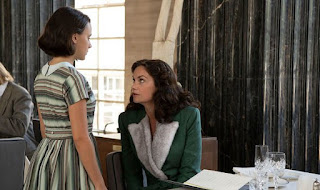


Anne is quite a known character in the literature world - she is an imaginative, thoroughly good person with quite a resentful personality as a child. The thing about really good people as characters is that unless you make them face some serious hardships, they will very often come across as rather boring and obnoxious characters that never really grow. This is exactly what happened in the Anne with an E - show. In the books Anne lost some very precious people to her and suffered a great deal and that also matured her as a person and it was easier as a reader to relate to her, since she wasn't just good without facing any tragedy. In the series, however, they had decided to make Anne both too virtuous and small-minded. With a competent script, this paradox could have served as a basis for good character - however, this is not what happened. Instead, in the show, Anne is ridiculously inconsistent - not because the series has purposefully created her so but just because they make her act that way (I guess to create extra drama). First she's some kind of miracle hero who rushes headlong into a burning building, and the next a petty malicious brat that looks down on the help. I guess the show creators thought that she had suffered enough by showing her past (which is there for shock value and for nothing else) because everything is handed to this girl on a goddamn silver platter. She doesn't have to work for anything, she doesn't have to lose or compromise something and she never faces any true loss. I do find it rather ironic that a show that so proudly proclaims to be progressive created a young black female character who did not exist in the book, simply to kill her off. So a black woman is killed instead of, you know, the old white guy who dies in the actual book this show claims to be based on. And in the end, her death didn't really mean anything to anybody, even her husband, who was fairly quickly hinted at getting together with the "unorthodox" Miss Stacey. Matthew was the first person who ever loved Anne, so his death was a devastating blow to her and also something that stayed with her the rest of her life and molded her as a person.   


The other major issue that I have in these shows is the strange adherence to traditional masculinity that didn't really exist in the original works. In Anne, they try to draw a contrast between the toxic masculinity of Billy Andrews of all people (making him the villain is the most ridiculous thing ever, if you've read the books) and Gilbert's more "feminist" masculinity which basically means "look, I'm standing up for women by speaking on their behalf". It doesn't really work, since both male characters ultimately look down on women, unintentional or not. What happened to the whole Gilbert can confidently wear an apron in public while the other boys couldn't because they were afraid of being perceived as ninnies? In the books Gilbert wasn't all that ambitious either, he was perfectly content to be a countryside doctor - in the show he wanted to become a world class doctor, curing every illness and study in some fancy school in Toronto. Also, the series' Gilbert is a two-timing prick. In His Dark Materials, however, come by far my biggest beef with this masculinity crap - in the books, Will was not a violent boy and in fact, avoided conflict to the last. There was also nobody in his life that he trusted, especially any men, which is why he took his mother to his former piano teacher, a woman. Will had this whole thing about being as invisible as possible so people would leave him and his mom alone. So, let's make this boy who wants to stay invisible, who dislikes violence and only uses it when forced, into a boxer. Because god forbid a black working-class boy play the fucking piano. Piano is far too emasculating, I guess. This is also disgustingly stereotypical - poor black boys don't play the piano, either because they are poor and black or because it is not masculine enough. Instead make this kid embody the most obvious stereotype of a poor black kid - a boxer. And again, Will only used violence rarely in the second book and in all of the situations his hand was forced - to save his mom from bullies (and as a warning to leave her alone) or to save his or Lyra's life. In fact, when he accidentally kills a man in the beginning of the book, this haunts him throughout both books. In the show, this event is barely discussed in a few scenes and then totally forgotten. 


Also, what's up with Anne and her gang constantly being obsessed about boys in the series? They're like 13-16 year old teens, why the hell do they care about boys so much? In the books, Anne never thought about boys, neither did she and her friends really talk about boys, until the third book when they went to college. I find it rather funny that a series that tries so hard to be relevant and progressive ends up being the one that conforms to society's views on women rather than the more conservative books. Benevolent sexism is rife in these series too - ie. women are better than they really are and men are worse than they really are. In Anne, Josie Pye is made into a victim, because that's what women ultimately are, instead of the petty narrow-minded person she really was. In His Dark Materials, Mrs. Coulter is softer in character instead of the cold-hearted villain she really was, because mothers can't be too cruel and Asriel is made into more of a bastard who would abandon both his child and love instead of Mrs. Coulter abandoning Lyra and leaving Asriel first because of the guilt and shame she felt. Religion also played a big part in these parents' narratives - Mrs. Coulter felt religious guilt and shame for the adultery and Lyra, its product, and Asriel was bitter towards the church and God for taking not only his possessions but his family from him as well. Hence, his whole quest for killing God and stuff, whereas Mrs. Coulter poured all her ambition to rising in the church, and thus they left their kid to her own devices to follow their own selfish objectives. The point was in the books, that both of these people were not good parents to their daughter, and realizing in the end that their daughter is the most important to them both and abandoning their ambitions to save their child. Asriel was, in the beginning, marginally the better parent, but even that played into shattering the illusion that Lyra had of him at the end of the first book, when he killed her best friend in front of her. And even when Mrs. Coulter does love Lyra by the third book, Lyra can never trust her, even if she does both love and hate her parents. 


A big elephant in the room that is missing from both series is, as I mentioned earlier, religion. Religion is pretty much fundamental to both stories - in His Dark Materials in a more critical way and in Anne more positive way. In His Dark Materials, the show's creators have turned the church into some kind of fascist structure rather than something that clearly emulates the medieval Catholic church. Neither is Mrs. Coulter a calculating religious fanatic or Asriel obsessed about killing God. Atheism and humanism, which were big themes in the original work, are hand-waved away and replaced with some vague notions of modern fascism and modern progressive sensibilities. I understand why these changes were made, of course, - Americans will not watch something that would portray atheism in any way positively. The US is a huge market for entertainment, much like China, so self-censorship in art is a frequent occurence. Anne, on the other hand, has clearly been influenced by its creators shallow liberal ideals, and I say shallow, because that is what they are - these ideals do not tie into any character narratives or stories, they are there just to bear witness how "progressive" the show is. Hence, Montgomery's rather unorthodox views on religion are never seen on screen in Anne and the wonderful humanist ideals that Montgomery imbued her religious beliefs with, are nowhere to be found in the series. Religion is truly almost completely irrelevant in Anne, with one giant exception, and this exception should piss you off even if you generally otherwise like the show - the First Nations residential schools. So, this show about white people in some rural village decided to have an episode about one of the most shameful acts in Canadian history -  the stealing of First Nations children, putting them in residential schools, erasing the childrens' culture and indoctrinating them in Christian faith. This awful history is purely there as a framing device to prove how incredibly righteous and good Anne is in this one episode to care about this one First Nations girl who escapes the shool, and then the issue and this girl, are completely ignored and left hanging for the rest of the show. The suffering of an entire group of people is reduced into a fucking footnote to glorify its white leads. White saviourism at its finest, indeed. And here is also the moment when religion is really presented in the show - it is bad and used for evil purposes. All the reverends, as well, that show up in the series are treated as ridiculous or super conservative. I myself am an ex-mormon, so I have no warm feelings towards organised religion, but Montgomery had far m0re nuanced views on religion than this show purports - she actually had quite a few atheist characters in her books and they were portrayed no differently from the believing characters. Montgomery also was not big on religious hypocrisy or religious authoritarianism. For her time, her beliefs were quite radical, and she was married to a pastor, to boot. Ultimately, both these shows are doing a disservice to religion and religious beliefs by ignoring their source materials criticism of said matters as well as their unorthodox and positive views on them.   


The final issue that I take in these shows has to do with how narratives and characters are built in them and the technical aspects that go with it. These series do not care about character narratives or themes - they ignore some super simple storytelling 101's that the original source material had and hence make both the characters and the story weaker. In His Dark Materials far too much time is wasted on minor characters (like the Costas and most of the witches) but then when there are minor characters that should be focused on they're cut short or cut from the story completely. One example of this is how Will's dad dies - in the book, his death follows a rather tragic pattern, his love and loyalty to his wife ends up being his demise and he is killed by a witch he rejected. In other words, he dies by an ally's hand. Some extra tragedy is brought on by the fact that Will and his father recognize each other a second before his death. Also, all three books end in tragedy of some form - in the first, Lyra is abandoned by her parents and Asriel kills her friend in front of her, the second ends in Grumman's tragic death by one on their side and the third book finishes with Lyra and Will separating through no choice of their own. Making Grumman's death all heroic, by protecting his son against an enemy soldier, goes against the tragic narrative these books have. Other major narrative issues I have are to do with the structure - showing the windows to other worlds before Will enters the picture means pretty much erasing the whole connection that Will had to the knife he receives. Will, the boy through whose eyes we first see a window to another world, inherits a knife that opens these windows. Also, the narrative theme of Will getting a weapon of violence when he dislikes violence is mostly gone from the show. Lyra, a girl who lies constantly, is the only one who can interpret the compass that tells nothing but truth. Since we saw the doorways to other worlds on the very first episode, Will is a boxer hence violence is already part of his life, and Lyra barely lies in the series, both of these narrative themes are gone. 


Show, don't tell is also very much missing in both these series. In Anne, rather than showing the deep friendship between Anne and Diana, they create pointless conflicts between the two. It does seem that writing forced conflict is the only way many modern shows and movies know to create tension. Montgomery often used nature to connect to her characters and their narratives but since there exists the obsession of Nolanising goddamn everything in the movie industry, of course we never see this nature and character connection in Anne, but rather, stuff that shouldn't be said by words is conveyed verbally and nothing is left to the imagination or for the viewer to interpret. The series has an opinion on the ready, so fuck those character narratives and any growth in character development, because our lead characters are already perfect and boring and always in the right. His Dark Materials commits this crime of telling instead of showing as well. For example, Lyra's parents meeting, when Mrs. Costa tells her about it, should have been shown as a flashback, since it is not in book form but in picture. Because we have never seen these characters interact, it would make perfect sense to see them together and build some chemistry between them before we see them meet again at the end of the first season. This never happens and instead we get a completely forgettable scene of Ma Costa explaining Lyra's parents' meeting to her. The second season of His Dark Materials has some similar pacing problems that the Two Towers film version has - it drags terribly in the beginning but then the end is far too rushed and characters that needed more focus, like Grumman and Scoresby and their relationship is left to the wayside. Instead the onus shifts to Mrs. Coulter (who was a minor character in the second book) and the show's weird obsession of trying to make her a modern "feminist" character while simultaneously taking from her the only thing that was feminist about her - her narrative arc.


Minor grumbles include that both versions of His Dark Materials (the movie Golden Compass included) had looming behind them more popular and famous fantasy series and it shows - the BBC's series comes off as a discount Game of Thrones. The wonderful cast is also wasted in both shows, especially Ruth Wilson, who was born to play Mrs. Coulter, much like Emma Thompson was born to play Beatrice in Much Ado About Nothing. Both of these series have kinda convinced me that the only form stories that are about children can work in, is animation. Because kids are simply not mature enough to show such deep emotion that is expected from good actors and it shows in these series as well - the children's storylines and character arcs are simplified or erased. This is especially detrimental to series, since they run longer than movies. This ties pretty neatly into what we wrote in an earlier blog post about the modern trend of moral film criticism and how we dislike it because it limits the scope of character narratives and how stories are told (eg. no metaphorical stories, since everything is taken literally). These two shows in their passive progressive preaching are good examples of this trend of pandering to certain views and beliefs instead of focusing on creating compelling and fulfilling narratives and stories. All art is political, I know, but that doesn't mean you have to be so damn hollow and unimaginative about it - otherwise your art might just end up on the same level of substance as PureFlix. And what self-respecting artist wants that? 


Saturday, 28 November 2020

Our utopia

 As we have expressed previously, we detest critiquing films purely based on their ideological content. Nevertheless, we thought we'd try our hand at moralism. Some of these movies we will most likely never watch again, but all of them are in essence personal stories (which we love) and never try to cram their ideology down the viewers' throat (which we hate) and all of them left an enormous impression on us. These are in no particular order as we are unable to rate which of our beliefs is the most important.


1. The Human Condition (1959 - 1961) - Anti-imperialism, anti-militarism & anti-authority

Yes, yes. It's a trilogy, but you can't pick just one! Unsurprisingly we couldn't find a movie that's anti-imperialist or anti-military from Hollywood. These films portray convincingly that blind allegiance to authority can lead the masses to commit or accept the most horrific actions. The films are very critical of the hierarchy and purpose of the military in general. These are the only movies we have seen that criticise so fundamentally its own country's history of imperialism and militarism. They are a heavy watch, but definitely a must-see for everyone.


2. The Eternal Road (2017) - Pacifism

This is the one Finnish movie that truly spoke to us. We have a few others we could recommend from Finnish cinema, but this is the one for us. Unlike in The Human Condition, which is against violence and war, The Eternal Road is decidedly for pacifism, non-violent resistance and peaceful living. This comes across because the main character in the previous  has somewhat a regressive arc and in the latter the main character never wavers in his principles.


3. Captain Fantastic (2016) - Libertarian socialism

The movie's conclusion is basically a compromise between the main character's unyielding utopian ideals and reality, which is the understanding that one can retain one's ideals while being part of a larger society. 


4. The Apartment (1960) - Anti-capitalism & anti-corporatism

The Apartment shows the hollowness of the corporate world, that you're nothing but a cog in a machine and everything is commodified, especially lower-class women. And the only way to avoid that is to leave. We of course go a step futher and say burn it all down.


5. On the Waterfront (1954) - Pro-union & Christian socialism

We don't buy in to the divine aspects of Christianity, but admittedly Jesus had some pretty rad ideas.We endorse the insights that unions are not really unions (or at least are not effective) unless workers are the ones who get to represent themselves and that for unions to prevail you need solidarity between workers.


6. Free State of Jones (2016) - Class struggle, solidarity & democracy

We like the idea that economic oppression is what can unite people across all human experience and bring about meaningful change and that it's nigh impossible to achieve that without democracy. It additionally shows that democracy is not democracy unless everyone is equal and has equal rights before the law. We recommend you also read up on Fred Hampton and The Black Panthers, The Young Lords and The Young Patriots in Chicago. It might as well be this story but with a black lead. 


7. Ikiru (1952) - Government bureucracy & value of community

Because we believe in democratic parlamentarism we also have to accept that bureucracy is necessary. But what kind of bureucracy it should be is what this film addresses. Bureucracy should be transparent, as simple as possible and work for the benefit of the citizens. People from the community should be the ones who work in the bureucracy for it to be effecive.


8. Princess Mononoke (1997) - Eco-socialism & environmentalism

Socialism that is based on the same industrial model as capitalism leads to the same conclusion: the exploitation and destruction of nature. If we didn't love entertainment so goddamn much, we would be borderline Luddites. Much like this film. 


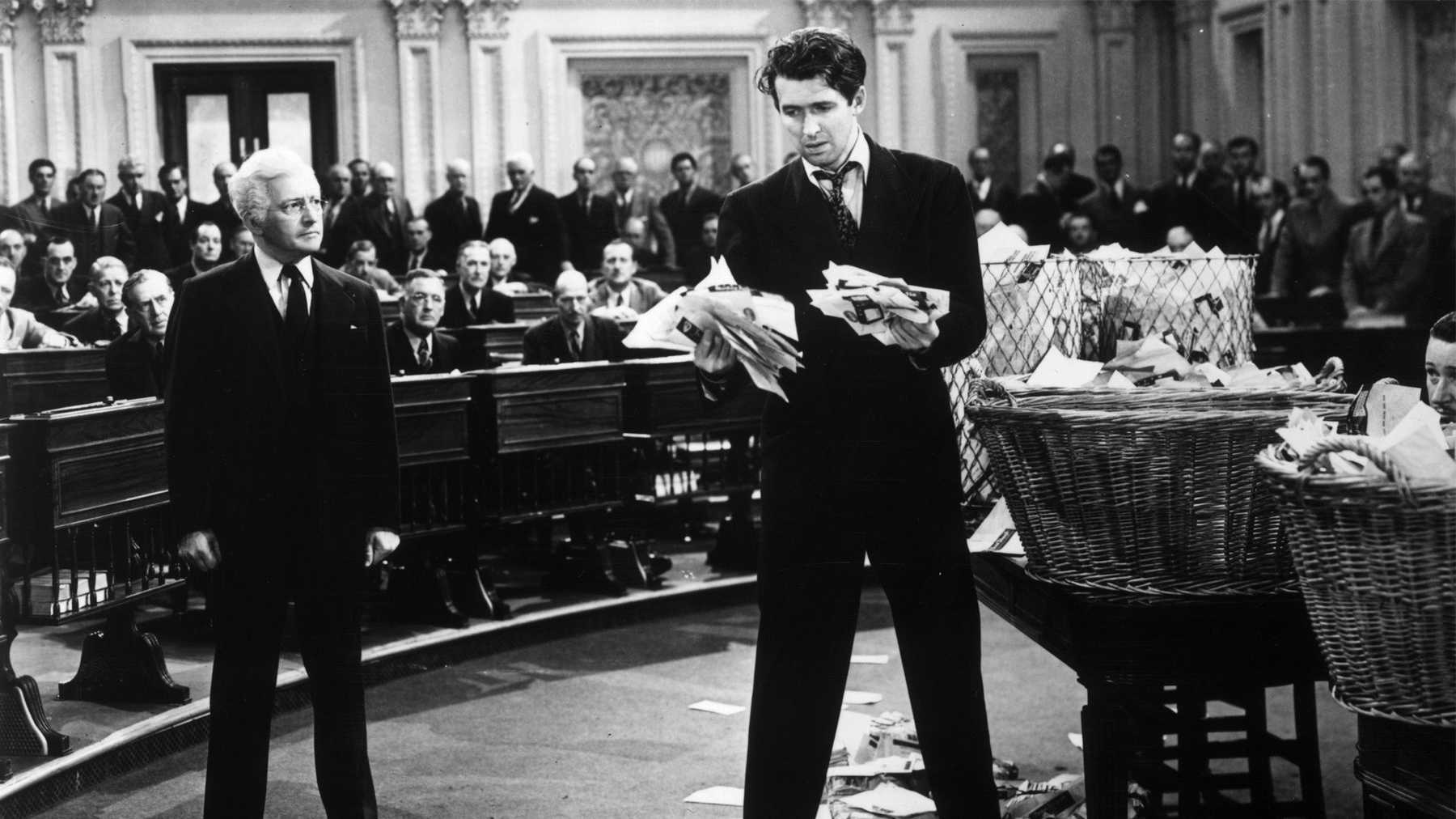
9. Mr. Smith Goes to Washington (1939) - Political corruption & parlamentarism

This movie essentially depicts what we think that political corruption often is; the merging of corporate (private) and governmental (public) power and influence. It also shows that this corruption makes parlamentarism impossible as your elected officials do not represent you, the voter, but rather monied private interests.


10. Silence (2016) - Spirituality & religious beliefs

Scorsese has always expertly portrayed his approach to faith and religion, particulary to Christianity. And since we have been raised Christian, we share that worldview and feel affinity with how Scorsese presents the doubt in your own faith and religion. While we personally no longer believe in deities or divinity, we have no desire to deny that spirituality and personal religious beliefs can bring comfort and meaning to others. However, we can never say the same about organised religion.


11. Nausicaä of the Valley of the Wind (1984) - Humanism

Humanism for us doesn't mean that you simply extend your sympathies to other human beings but to all existence and life. Since we eat industrially produced animal products, we are hypocrites in our humanism as much as we are in all the other ideals. That's why this post is called "our utopia". But that's also part of humanism, that everyone errs. One big reason why we picked Nausicaä, although read the manga as well.


12. Dead Man Walking (1995) - Anti-death penalty & prisoner reformation

We are adamantly against the death penalty in any instance. We can't even comprehend how any American can sleep knowing that 4 % of death row inmates are or have been innocent of the crime they have been convicted for. We do not believe in "an eye for an eye" but we understand the impulse, we have that too. It doesn't mean we or the state should act on it. Humanity in general should strive for better, and that's where prisoner reformation comes in. It's a heavy and complex subject and it would be impossible to convey all we think about it in a few sentences. It has to do with how the society is formed, what laws are decreed (and for whom) and enacted and how the society participates in preventing marginalisation of people.


13. Portrait of a Lady on Fire (2019) - Feminism & equality

Even though this is a historical piece, the subject matter makes it relevant. Yes, there isn't as much class analysis, but that's kind of not the point. The point is that no matter your social standing, if you are a woman your path has already been made. It would do you well to remeber though, that neither of the women have their own property or money, and that the artist has to paint under her father's name to gain any independence. 


We have a few honourable mentions that we must include. If Beale Street Could Talk (2018, racism & class), Wag the Dog (1997, media & manufacturing consent), Norma Rae (1979, pro-union & feminist socialism), The Mission (1986, spirituality & religious beliefs, not the Christian imperialism), Arrival (2016, anti-militarism & diplomacy), The Bad Sleep Well (1960, anti-capitalism & anti-corruption), Tokyo Godfathers (2003, humanism). Since we chose to only include films we could not take our Bible for pacifist philosophy, which is Trigun (1998) obviously.

Friday, 23 October 2020

Pick of the month

 Noir (2001)


It seems we're still not over anime. But honestly, this show deserves way more recognition than what it currently has. Surely one of the reasons for that is because it's purely about women and the only romantic undertones are between the leads without any sexy business. Its Imdb rating is criminally low. This show surpasses Cowboy Bebop by a mile and a half. Even the soundtrack is much better (and we love Yoko Kanno). However, Noir is Kajiura at her best. The visual style is stunning all around, particularly the use of shadows. Perhaps it has not garnered as much attention as other shows as well because men are completely irrelevant to the story.

This show is a slow burner so one does require patience in the beginning. It will pay off though, we promise. If you like character driven narratives with cool action, this is the show for you. Additionally, it's not bleak as fuck. 


Monday, 28 September 2020

Anime in retrospect

First, some background on why we got into this now very popular form of entertainment. Way before anime, we  were obsessed with anything fantasy-related. We read all the fantasy books in our tiny village library and then, after moving, raided the city library for all the rest. Also, we were practically raised on Disney & other quality Western animations. After a few years of our fantasy period, the two finally merged in the form of anime. Fantasy + animation - how could we, in our early teens, resist the temptation? We couldn't, thus we spent the better part of our teen years obsessed about anime. This was also way before anime became popular in the European mainstream and was mostly only known either in the gamer or art movie circles. We've always preferred liking things that were more unknown or weren't the most popular in our immediate circle. So, anime fit like a glove in that aspect as well. Then, some time passed, we got a little older, anime became more popular in Europe, and we had been burned by so many anime shows, that we just naturally lost interest in it. Miyazaki, of course, was never really anime to us, so he stayed as the only reminder of, to us then, our embarrassing anime years. 

Along the years, we re-watched all of our old favourites, and came to the conclusion that Trigun is actually one of the best shows ever, so we couldn't include it being anime. Because anime was something shameful. And then came corona and returned us, like a time machine, back to our teen years (well, that and Hollywood's complete creative bankcruptcy). It has forced us to come out of the anime closet and admit to ourselves that we actually like this shit, embarrassing or not and no matter how much anime still has things that we absolutely hate (which we will go over in detail). The point of this post is to clarify to ourselves why we still like anime, while also still hating anime at the same time. We have a history of loving fantasy (as noted in the beginning) and the first anime anything we saw was Princess Mononoke. It had something that Western cinema never had for us (especially the fantasy genre) nor do we believe will ever have. Epicness tied with deep and thoughtful material. We'll divide this post into two - first we are going to go through what we consider to be singular in anime and which we find fascinating. Second, we are going to look at aspects that we absolutely loathe in anime.

Mononoke - epic and deep
 

If it hasn't become abundantly clear from our previous posts, we are indeed bleeding-heart pacifists and this particular theme pops up surprisingly often in anime. Not only that, but other themes related to pacifism, like war and violence, also feature heavily in anime that we fancy. Themes are one of the biggest reasons why we like a film or a show and especially tying a theme to a character's narrative grabs our attention. These themes also greatly appeal to us because we hail from a nation where the devastation of war is still somewhat fresh in our national consciousness. The war stories are also passed down from generation to generation, since pretty much everybody's grandparents served in the war. We assume some of this might have some similarity to Japan (after all, we were both allies to the Nazis) and especially the dropping of the atom bombs have clearly affected the Japanese psyche, which is pretty clear from the numerous examples of nuclear imagery that is presented everywhere in anime. Continuing on the theme alley -  anime has some of the most fucked-up shit you could ever witness anywhere. In the best possible way. Seriously, Game of Thrones has nothing on anime. The most vile disgusting person may find redemption, you might cheer on a relationship where the couple consists of a wife beater and his abused wife or a psycho brainwashed kid unhealthily obsessed with a girl. And then you end up liking characters that are ambiguous if not straight up unsavoury. This is not something one often finds in Western entertainment - you have your share of fucked-uppedness, anti-heroes and even somewhat sympathethic villains but not to the degree that we have found in anime. Anime often has the whole "two ideologies clash against each other", whereas Western films or shows are mostly focused on proving the "good guys" right. 

Vash - probably the most subversive male character ever
 

Probably one of the reasons we've been drawn to visual medium is because it has to combine so many different forms of expression - picture, words and sound. Sound for us has always represented music and a film's soundtrack can greatly sway our opinion on the movie as a whole. Anime has gone downhill the same way Hollywood has in original score material but in the 90's and 2000's anime truly had some of the most awe-inspiring soundtracks one can find anywhere. Anime also had a longer time to hold on, since Hollywood started to suck in the music department once Christopher Nolan showed up. It's not only that the music was great during those heydays of anime, but how they used the music in the shows. Combining visuals and music expertly will get us interested. The 90's and early 2000's anime really excelled at this storytelling via music and visuals (our favourite female composers, Yuki Kajiura & Yoko Kanno, also come from this era). Another thing that anime has is, of course, the animation itself - we are old-school and do not find nearly as much value in CGI that many others do. No, we've always admired hand-drawn animation more, whether it's the very time-consuming actual hand-drawn animation or its modern variation, 2D. Anime also has some of the most memorable character designs. Anime that we would unreservedly recommend to anyone that fullfill the aforementioned requirements are eg. - Trigun (duh!), Evangelion (no anime has looked better and don't @ us), Noir (excellent in both the music and visuals department, plus the complex female characters), Koe no Katachi (for a modern anime it has amazing storytelling visuals) and obviously, anything by Miyazaki. Unfortunately, the festering of CGI has infected most of modern anime as well and this started around 2004-05, and the time before that (2000-04) is something we like to call a "transition period" when anime was gradually changing in style and substance.  

Evangelion - beautiful yet disturbing imagery
 

Now here comes all the painful stuff we've come across in anime so, so, so, so very many times. Number one issue - female representation. Jesus Christ, anime is filled to the brim with these big-tittied worshipful teen girls who are continuously sexualized while simultaneously remaining utterly sexless. It's amazing, really. Anime has truly taken to heart the whole "sexy virgin" trope. Also, women (or girls) who have sex being punished by death or torture, is a little something anime clearly stole from the horror genre. Note here, that we mostly saw anime that was directed to boys, ie. shonen as it's generally called, and surprisingly, once we started to watch stuff directed more to girls, ie. shojo (and not the magical girl kind), we were shocked to discover that shojo often treats its male characters much better than shonen does its females. The men in shojo at the very least are usually given something of their own, separate from the main character, whereas women in shonen barely ever have anything separate from the main character, not to mention a narrative arc of their own. The one trope that raises our blood pressure the most in this department is a phenomenon we have dubbed as " the worship girl". She is something one comes across quite frequently in these boy animes - a (main) female character whose only purpose is to focus on the boy hero, they have no other life besides the man, nothing of their own that would be separate from the main character, they do not challenge the male lead in any way and their thoughts pretty much revolve around the main character. They also rarely have anything significant to do in the story. It does not matter whether the female character is physically strong or her personality is different from the usual "cheerful anime girl", these traits make her a "worship girl" and ultimately entirely unrelatable. You have a myriad of examples to choose from but if we had to put down our most hated ones, they would go thusly - Kaoru and Misao from Kenshin, Mikasa from Attack on Titan, Sakura and Hinata from Naruto and Uraraka from My Hero Academy. And that's just a tip of the iceberg. 

Kaoru - the original "worship girl"
 

Another trope that one sees in anime is "power accumulation" and with that the "big bad evil" because a story always needs an antagonist. "Power accumulation"is mainly the main hero continuously getting more and more powerful, often in order to match the "big bad evil". The "power accumulation" boy character (and it is far more often a boy than a man) is also frequently a very boring character, who has no other motive than wanting to be powerful or a hero just because. They are often endlessly optimistic as well. Also, in these stories, one is usually promised more intrigue from the villain but then in the end it's just a "big bad evil" that must be defeated. The female character in these "power accumulation" shows is also quite often a busty "worship girl" who is pretty much presented as a prize to the boy for his hard work. So basically, a male power fantasy. Shojo does have the "undying love from an older man" female fantasy too, they just give their male characters a personality, if nothing else. Something else that plagues these "power accumulation" stories as well, is that their main stories, much like their main lead, is a total borefest and instead their side stories (and minor characters) usually end up being far more interesting than anything else in the show. Examples of these kinds of series are again, found in abundance - most famous one probably being Dragon Ball Z and close behind it, Naruto. 

Currently the most popular "power accumulation" series - My Hero Academy
 

And now probably comes our most hated trope in all of anime - which we are calling "destiny love". Anime can't do romance. There, we said it. Seriously, try to prove us wrong - with the endless love triangles, forced conflict and "worship girl" syndrome, how CAN one write a good romance? Romance in anime is unfortunately the kind we have termed "Luke and Leia" ie. boring and obvious. The romantic couple often has some supernatural connection that lazy writers come up with when they can't bother to write and create actual dialogue and chemistry between the couples. Our most hated example of this trope is, you guessed it, Kimi no nawa. It's a bad sign if your hentai (ie. porn) has better romance than your actual shows. The last trope that inhibits especially the more serious anime is something we've dubbed "bleak as fuck". This term means basically nothing means anything, everything is shitty, in a word, nihilism. We can be okay with this, but we must say that for especially series, we couldn't be bothered. After all, watching a movie that is all nihilistic is completely different than watching a show where nothing means really anything that lasts double or triple the time. In anime, this bleakness can sometimes also come out of nowhere which then fucks both the characters and the story (like for example, El Cazador, where the bleakness was not warranted). Also, a big problem for us in these "bleak as fuck" shows is that they frequently lack a character narrative and focus more on concept - we do like concept driven series (like Evangelion) but the bleakness often also makes the characters more distant and unrelatable, so in the end one is left with just the concept and that ain't what we look for in fiction. 

Kimi no nawa - destiny love at its cheesiest
 

In the end, the reason why anime still has its hooks on us, is because it has themes and characters that Western fiction just wouldn't come up with. Whatever else, anime is unique, and why our interest continues is because it gives you something amazingly different but then at the last minute punches you in the gut and fucks you over. We hate it. It's torture, but we can't seem to give up hope that someday one of these shows will deliver.


Monday, 15 June 2020

Random anime/manga recommendations

The first thing one might notice about this list is that it is missing probably the two most venerated series of all anime, namely Cowboy Bebop and Death Note. Neither of the shows had any appeal to us, but if one is interested in visual and highly stylized storytelling, Cowboy Bebop is a pretty safe bet. It does look amazing. Although, if you're into Yoko Kanno's music, Vision of Escaflowne's soundtrack is the superior of the two. Death Note is your basic nihilism, and we're not into nihilism (best part of the entire show was the cat-and-mouse game of the two lead characters and once that was over, our interest waned). Basically this list is just an accumulation of all the random shit we've seen and you could do worse than flip through them. Simply remember that anime is somewhat of an acquired taste, it's not for everyone.

1. Trigun. Because it's perfect. We wrote about this series exhaustively so we don't see the need to expand further. Except that every person identifying as male should see this show.  The artistic style might seem too simplistic at first, but stick with it; it won't seem that way after a while.


1. Princess Mononoke. It's one of our favourite movies ever. Of course it has to tie with one of our favourite TV shows ever. Miyazaki (together with Hisaishi) is a fucking genius. This is absolutely the best fantasy film ever made. It refutes the argument that fantasy can't be deep and thought-provoking.


3. Nausicaä of the Valley of the Wind (manga). The film is bloody brilliant. However, the manga is simply better because it's more extensive. There's more time for other characters as well. For example, our favourite character ever from Miyazaki's canon: Kushana. Please read it. You do not know what you are missing.


4. All other Miyazaki films starting from Nausicaä (1984) to Wind Rises (2013). Go to his Imdb page to get the full list. Wind Rises is a recommendation for those who generally don't care for anime. The man is unable to make a bad film.


5. Neon Genesis Evangelion (the series). After we found out that the film wasn't even originally part of the story but a giant fuck-you to the complaining fans, the movie is to us the same as Star Wars prequels, ie. it doesn't exist. This series is pretty fucking great. We must be the only ones in existence who actually liked the series' ending. All in all, this show is basically Ender's Game but better. Do watch it and don't you dare skip that opening.


6. Noir. This show is especially for those who do not hold an interest for anime. Because it lacks all of the usual anime clichés. The animation and music are superb. It's almost baffling to see an anime where women kick ass without being overly sexualized. Sure, much like Trigun this requires a lot of patience as the idea really kicks in later. It is completely worth it though. This series is criminally underrated. We cannot comprehend how this show isn't a household name in geek women circles. Repent all ye sinners.


6. Koe no Katachi. We just wrote about it so we don't feel the need to elaborate further. It's just a damn good movie and possibly one of the best coming of age stories out there.


7. Nodame Cantabile (manga).  This is one of the funniest and most heartfelt things you'll ever read. The namesake female character is especially brilliant - she is both funny and serious, which is incredibly rare for women in anime. Also, the romance is surprisingly funny and subdued, unlike most anime romances that come across as disgustingly sappy.


8. Only Yesterday. This is our pick from Isao Takahata. You could watch Grave of the Fireflies, just prepare yourself for the crushing despair to follow. Only Yesterday is very much the opposite to the latter. It's so happy and incredibly sweet. We love the watercoloured background that gives this movie its distinctive visual look.


9. Rurouni Kenshin (manga - Remembrance arc). You can watch the OVA, but the manga is better so we'd suggest that you listen to the OVA's soundtrack (which is awe-inspiring) while reading this arc from the manga. If you want, you can watch the Shishio Makoto arc from the anime (the music and animation are pretty great) but it has substantial problems. The creator botches the main female character. It has other issues as well, but that's the worst one. The Remembrance arc is some seriously good shit though.


10. Bleach (manga). This is the most basic anime/manga we have on this list. It's your usual teenboy hero power accumulation fantasy story. Iiiiiit's pretty okay though. It's surprisingly entertaining, because all the characters are actually likeable. If you want to torture yourself, you can also check out the anime that never had the last arc, thus making it feel incomplete. We would advise against watching it also since the gazillion filler episodes do not make it worth your while. 


11. Berserk (manga - Golden Age arc). You can read the first three volumes as well, but the Golden Age arc is the best one. The story's basically a variation on the Arthurian melodrama (think Arthur, Guinevere, Lancelot) with a mix of Faust. This is our Game of Thrones and much like GOT, the creator did not know when and how to finish the story. We appreciate that the manga shows all the nobles as horrible depraved people unlike most other fantasy does. Unless you really hate women, we would urge you to stop reading the manga when the group descends to Hell. 


12. Ranma 1/2 (manga). It's crazy and it's funny. You can read the whole thing, the last chapter is still actually really funny. And dear god, do not skip anything that has Nabiki in it. Our personal favourite chapters would be the Romeo & Juliet ones. 


13. Fullmetal Alchemist (manga). We have some mixed feelings about this. Because we would have wanted that this story would have taken the depressing male characters from the 2003 series and the female characters from the manga. Furthermore, if those had been combined with the music and visuals from the 2003 series, that would truly be something to behold. Alas, the best thing about the manga is the adults and the flashbacks to the war. 


If you want other recommendations for shits and giggles (aka guilty pleasures), we can give them privately.