Sunday, 2 October 2022

Romeo & Juliet x4

There are two kind of tragedies that are told in story form - tragedy of consequence and tragedy of circumstance. Some of the most famous tragedies come from the pen of, you guessed it, Shakespeare. He has written both tragedies of consequence and tragedies of circumstance, Hamlet being an example of the first and Romeo & Juliet the latter. We have decided to take this doomed tale of teenagers to compare different versions of it and see which ones have gotten the gist of it more right than wrong. Reading the original play it is quite obvious to see that Romeo & Juliet has not one decent adult in the entire story and in the end this adult abandonment leads to the kids' demise. That is the aspect that we will pay special attention to when comparing these films.


Romeo and Juliet (1954)


Characters


Romeo: The sleaziest Romeo by far. Romeo is supposed to be boyish and charming but this guy plays him like he's over 30 (even though the actor was just 26 at the time). Like all actors in this movie, he is quite stiff and we can't help but think that it is partly because of the theatrical setting of the film rather than the actors themselves.
Juliet: Far too meek and spiritless. She is probably the least wooden of the performances, but Juliet's rebelliousness in falling in love with Romeo and then continuing the love affair despite knowing he's the enemy is just..not there. Basically, all the passion is sucked out of her.
Mercutio & Tybalt: Barely in the movie, when Mercutio is supposed to be Romeo's best friend and Tybalt is supposed to be the culmination of all the Capulet's hatred towards Montagues. Tybalt is meant to be a rather tragic character but there's none of that here. He is just another wooden plank. Mercutio is even worse, he has none of the joviality and prankster in him nor the unsettling mood swings he gets in the original story.
The Adults: As forgettable as the rest of the cast. The performances just exist and there is absolutely nothing memorable about their scenes. Though in this one Friar Laurence is even more despicable than any other version, since he just watches Juliet kill herself and moves not a muscle to prevent it. Paris is not much present either. The parents are also there and say all the right things but it feels like nothing since there is zero emotion behind the delivery. 


Story
 
It all feels very staged. Watching this film felt like eating highly processed food - the taste is bland and boring. This is probably storywise the most accurate version of Romeo & Juliet (minus Romeo suddenly hitting Paris with a rock when it was supposed to be a duel between them) but it is such an utterly lifeless version of the play that as a film it would fail to capture either moviegoers or theater folk. We have never been more bored while watching this story (and it is our favourite drama from Shakespeare's repertoire). There is not a hint of the passion that Romeo & Juliet harbour for each other and a lot of that comes down to the movie's directing. Romeo & Juliet are barely allowed to be in the same room together or really even touch each other except briefly. Yeah, try to find the passion in that when they have to get married in separate rooms.

Misc./Technical aspects
 
The direction in this film does not work AT ALL. It's like the director didn't know that he was supposed to be making a film. This movie is directed like a stage play and dear god how dull and lifeless it makes this story that is supposed to be a film. Stage play is a completely different animal from visual media and you cannot possibly expect that a movie works the same way that theater does. Plus, the outfits (especially the "penis pants" as we call them) are horrendous and the colours are way too distracting probably thanks to the theatrical settings. The camera also does not move, like at all, during scenes and there are no close-ups. 
 
Romeo & Juliet (2013) 


Characters
 
Romeo: He's much more of a naive sweet talker than someone with cheeky boyish charm. At the very least though he knows half of what he's saying unlike our heroine.
Juliet: "Juliet, did you learn your lines?" is the apt saying in this character's case. Unfortunately, it seems that Hailee Steinfeld did not, in fact, learn her lines. Her Juliet is more lifeless and wooden than the 1954 one. She has no clue what she's saying and the director clearly hasn't instructed her in anyway. The worst Juliet by far.
Mercutio & Tybalt: Again, barely in the movie. In Tybalt's case he does at the very least reflect the hatred of Capulets but poor Mercutio gets shafted again. 
The Adults: Damien Lewis is far too good for this trash. He actually manages to turn out a pretty magnificent performance as Lord Capulet which this movie does not deserve. Friar Laurence is way too kind to play the priest who ultimately only thinks of himself. There's too little of Juliet's nurse as well, though she is fine for the part. Paris is puzzling - he is supposedly so obsessed with Juliet that he challenges Romeo to a duel at the end, yet we've never seen Paris and Juliet interact or even meet each other once.


Story
 
Combining Benvolio and Balthasar is the only change here we accept, since it works on film. Changing Shakespeare's dialogue and inventing new dialogue we do not. It was ridiculously awkward when the dialogue changed into the more modern delivery and you could immediately hear how bad the change sounded. It did not flow at all and if Shakespeare got one thing down, it's flow of words. It's awful and we hate it. 

Misc./Technical
 
A medieval tragedy has no business to look like a romanticized 1800's period drama. It sucks out all the melancholy and depression out of the story and makes it look like a generic romance film. 

Romeo + Juliet (1996)


 Characters

Romeo: Ok, this Romeo definitely has the melancholy down. Luhrmann clearly wanted to emphasize Romeo's more rebellious and wilder side than his boyish cheekiness. It actually works surprisingly well for his character, which we did not expect at all.
Juliet: Another meek version of Juliet. But Juliet does show deep desperation towards the end of the film, so we guess that's something. We're just not very fond of versions of Juliet where she is presented only as virginal and pure. 
Mercutio & Tybalt: Mercutio is hands down the best thing in this entire movie. He is breathtakingly awesome and delivers Shakespeare's lines like a total pro. We have a soft spot for Leguizamo's Tybalt and he does emit the hatred quite convincingly. Side note on Benvolio - he is disastrous and the movie would have survived without him.
The Adults: Juliet's dad is a full on domestic abuser, which fits well for the story. Juliet's mom is attached to Tybalt and is bent on vengeance after he dies and cares not a whit of her own daughter. Though we must say that we were not thrilled of the change of making Juliet's mom a victim instead of an enabler. Friar Laurence and The Nurse get far too little screen time and that unfortunately affects the story negatively. Movie, you had Pete Postlethwaithe and Miriam Margolyes to ham it up - why didn't you use them more? Friar Laurence is also a little too sympathetic here. But the biggest miscast of all time (aside from Kevin Costner as Robin Hood) goes to Paul Rudd as Paris. Firstly, he's way too young (because the guy doesn't age) and the reason we are left with why Juliet isn't interested in him is because he's dorky. But it's Paul Rudd - of course he's dorky and everybody loves him for it. It just does not work.


Story
 
Whatever other faults this version has (and there are many) it got two things right - the relationship between Romeo & Juliet and the friendship between Romeo & Mercutio. This is basically our guilty pleasure from Baz Luhrmann. Since they got these two important aspects right, the film works better than most other versions. Unfortunately the whole adult abandonment doesn't really show in the movie as much, since Friar Laurence isn't a selfish bastard who comes up with the idea to marry the youngsters to bury the feud between the two houses. The friar isn't actually thinking about the kids in the original play and instead of sending Juliet to Romeo he just comes up with a ludicrous and complex plan of poisoning Juliet and sending a letter to Romeo. This is another minus for the movie, since it happens in modern times, one starts to wonder why couldn't the kids just elope together or the priest just call Romeo up. The scenes with Mercutio & Romeo are sublime and Juliet's father is good foil for the kids but since Paris is so likable it is hard to feel that Juliet's desperation at the film's end is as warranted. Our biggest beef, however, would have to be the ending, where Luhrmann for some mysterious reason makes Juliet witness Romeo's death (2013 version committed the same sin). The whole point of the tragedy is that Romeo is already dead when Juliet awakens - that IS the tragedy. That the society and the adults surrounding the children have driven them to this final desperate action. Not some smug judgmental moral of "oh look, these stupid teenagers thinking with their hormones doing shit they'll regret". In the original story, Romeo & Juliet did not have choices or they were severely limited in them - that is why it is a tragedy of circumstance.

Misc./Technical
 
We absolutely loved the theme of water that showed up to express the idea of youth and young love. The first meeting of Romeo & Juliet is super memorable and works as a visual representation of them seeing each other on the opposite sides. The melancholy 90's emo music brings the depressive mood to the film (especially Radiohead). Romeo's introduction is particularly striking. We love the sets but too bad that Luhrmann's less than 5 seconds editing rule gets in the way of enjoying these beautiful set pieces.
 
Romeo and Juliet (1968)


 Characters
 
Romeo: The boyish cheeky charmer with puppy dog eyes that Romeo is supposed to be. He's a dreamer but also an eager boy experiencing his first love. This and the Luhrmann version are the only ones that present his one-sided crush on Rosaline as fleeting and not serious instead of making Romeo talk hours on end how much he wants to stalk Rosaline or how deep his love for her is. Thus, this Romeo is spared of the sleaziness the 1954 Romeo exhibits.
Juliet: THE quintessential Juliet. There has never been, and we doubt will ever be, a better one. She was born to play this role (much like Emma Thompson was to play Beatrice). She's got spirit and passion and her desperation really shines through at the end of the film. There is no meekness on sight in this Juliet and we love it.
Mercutio & Tybalt: Another Mercutio that got it right - he is a playful prankster who has strange and sudden mood swings and Romeo is really the only one who understands him. Tybalt is proud, arrogant and rash. His anger and hate isn't maybe as visible as in other versions but his unrepentant attitude after murdering Mercutio makes his hate feel more chilling. 
The Adults: Here it is, the one version where the utter disregard the adults in this story have for the kids is on full display. Juliet's parents could not care less for their daughter's opinions or feelings and Romeo is clearly a disappointment for his clan, since he doesn't like fighting. Friar Laurence seems at first to care for the children but in the end, comes up with a ridiculous plan of poisoning Juliet and then sending a letter of the plan to Romeo through snail mail. Neither does he stay to keep watch over Juliet near the catacombs but instead retreats to his church and finally, after Romeo is dead, flees and abandons Juliet to her fate. The Nurse is also a backstabbing adult - first she's all in for Juliet getting married to Romeo and encourages her but then after Romeo is banished turns coat and pressures her to marry Paris. This is an important betrayal, since The Nurse is more of a mother to Juliet than Juliet's mother ever was. And talking of Paris, he is way older and feels a little predatory. Juliet also has zero interest in him.


 Story
 
The feast at the Capulet house, where our star-crossed lovers meet the first time is expertly directed and acted. All the actors know what they are saying and trust us, that makes ALL the difference. We actually believe that these two kids are in love. Also, this is the one version where they managed to get actual teenagers for both main roles. As we mentioned in the character section, this is the only version that shows how callous and uncaring the adults are about the children, their opinions or their well-being. And how the kids get caught in the meaningless feud of the parents that lead to their double suicide. Ultimately, even the prince is useless as a ruler since he just bellows his judgement up high but does nothing to quell the hatred between the houses. The medieval setting also works to make the kids' lives more oppressive, as they really have no say in their own fate and Juliet especially feels boxed in as not just a child but a girl, whose only purpose is to marry someone her parents chose. 

Misc./Technical
 
As said, the lovers first meeting looks amazing and all the set designs are as authentic looking as possible and create a mood of 1500s Italy. The costumes are accurate for the era without looking gaudy or ill-fitting on the actors. The direction is competent and the use of close ups is very smooth. You cannot talk about this film though, without taking into account the music. This is absolutely some of Nino Rota's best work ever and the melancholy yet youthful tone of the score highlights the scenes and characters beautifully, creating a perfect union between visuals, story and sound.  

Friday, 31 December 2021

Pick of the month

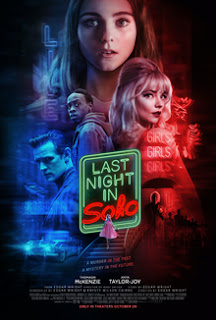
 Last Night in Soho (2021)


We had been expecting this since we first heard about a new Edgar Wright. It did not disappoint. We were especially thrilled to hear that its influences were Don't Look Now and Repulsion. And it shows in the best ways so we also urge you to check those two out before watching this. Everything about the film is pretty much perfect. The cinematography, editing, set designs, costumes and most particularly the goddamn soundtrack. Wright really is the master at using popular music and recoding it to tell a story. The chef's kiss of that is the disco scene. The colour scheme is incredibly distinctive, especially when compared to its contemporaries.

It was great to see that Edgar Wright is capable of directing female narratives, although some of it surely had something to do with the fact that the co-writer was a woman. If this is still in theatres near you, go see it if you can. Otherwise stream it, rent it, buy it, whatever, but give money to movies like this so we can have some variety.


Saturday, 2 October 2021

Feminist films

Plain and simple, these are some of the most impactful feminist movies we've seen. If you ever get tired of male centric stories, these are pretty good alternatives to watch. As we do with fiction, we have picked films that focus on personal narratives but also have some pretty deep societal criticisms to offer, since the subject is political. We have categorized the movies to different branches of feminism, just to make it easier on ourselves and they are in no particular order.


1. The Handmaiden (radical feminism). This cinematic offering is probably the clearest representation of radical feminism we've seen in mainstream film industry. The women are resisting men's sexual violence and even destroy the predator's ancient porn library, for god's sake! Radical feminism is, after all, first and foremost about escaping men's sexual violence and it is the feminist branch that comes closest to misandry. This film is a visual stunner and the music is just as amazing. Not to mention the feminist lady boners one will get from the story.


2. Thelma & Louise (cultural feminism/radical feminism). This one was harder to pin down, but we thought that cultural and radical feminist elements were most visible in the movie. In the film, patriarchy is seen seeped into the culture and it manifests as either relatively harmless catcalling or in the worst case scenario, rape. The women, like in the previous entry, resist and try to escape this culture. Also, the women  don't shy away from using violence, which is often seen as a legitimate way to fight against male power in radical feminist philosophical texts.


3. Portrait of a Lady on Fire (liberal feminism/cultural feminism). Here we have an intersection of liberal feminism that comes in the form of the painter Marianne having a job and using her father's name to paint and cultural feminism in the form of Héloïse having to marry because she is upper class. Liberal feminism is very big on women having the right to vote, having ownership of property and, of course, women having a profession. In other words, political rights. Whereas cultural feminism is much more about the culture in general being oppressive towards women and it does not concern itself nearly as much in the political strife.


4. The Hours (liberal feminism). This is probably the most obvious liberal feminist movie on this list. All of the women are relatively well-to-do and the film depicts their struggles as women who want to work, be independent and live their life freely but face the struggle of laws or culture that make it harder for them to do that. We see, as well, how women have gained more rights or how the culture has changed over the decades through the three different stories. One could argue that this film also depicts intersectional feminism since one of its main characters is a sexual minority but since the movie ignores race and class we do not think it passes the muster in that aspect.


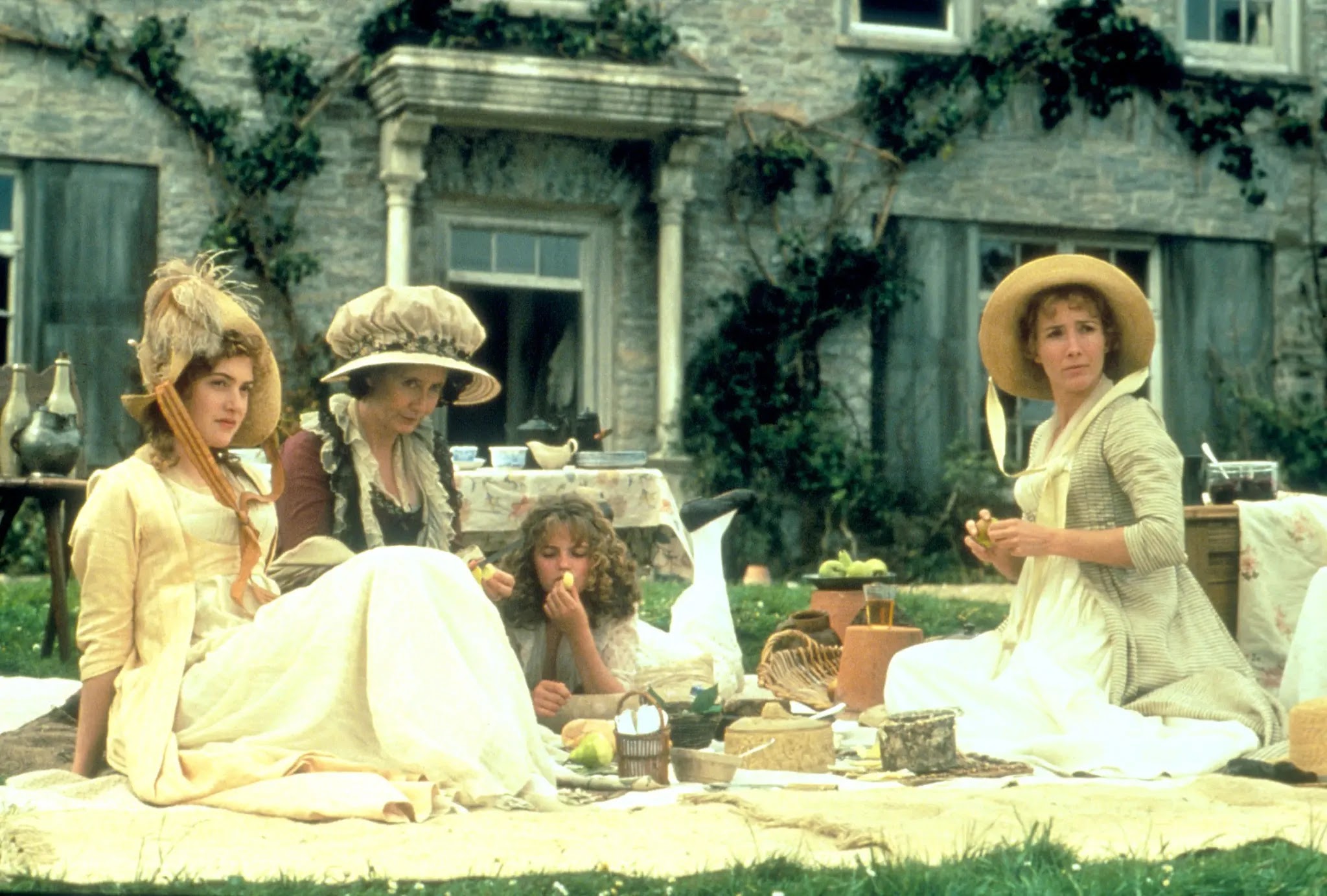
5. Sense & Sensibility (proto-feminism). Austen's work is pretty proto-feminist. Her books are about women, issues affecting women and their inner thoughts and feelings, at a time when most known authors were men. She lived around the same time as Mary Wollstonecraft, one of the earliest, if not the earliest, Western feminist thinkers and one could quite easily imagine that Austen read some of Wollstonecraft's declarations. Emma Thompson's screenplay reflects perfectly Austen's feminism before feminism was a thing.


6. If Beale Street Could Talk (womanism). The history of feminism, especially in the US, has been mostly dominated by white women and that has unfortunately created racism in many feminist circles where black women's issues are often ignored or belittled. This beautiful film not only focuses deeply on problems that affect black women but also has great bonding between women. Womanism is especially interested in communities and people's ties to each other and the movie shows this community love very poetically.


7. Mad Max: Fury Road (dystopian feminism/radical feminism). Another one where women are escaping men's sexual violence and power. It also combines apocalyptic visions with dystopian views on feminism - according to this movie, at least one place is very much run like the Handmaid's Tale but then is balanced with the all-women community the runaways meet. In the end, the film kind of finds this equlibrium of women and men working together to vanquish the evil patriarch, which is why we cannot fully label it as radical feminism because that field is quite vary about working with men.


8. Mulan (cultural feminism). This movie is probably the shallowest take on feminism we'll have on this list - but in the end, it is a story about a woman fighting and conquering stereotypes in a predominantly male environment. To this day, it is the best offering Disney has given in feminist filmmaking and will probably remain so for the foreseeable future.


9. Nausicaä of the Valley of the Wind (eco-feminism). We all know how awesome Miyazaki's female characters are and how often he focuses his stories on them. Nausicaä has both the awesome and complex female character and the ecological message of treasuring the nature surrounding us, since we cannot live without it. One could argue that the film also depicts how women are socialized to be more tuned to nature and living things whereas men have been socialized to take lives and trample on the environment in the name of warfare.


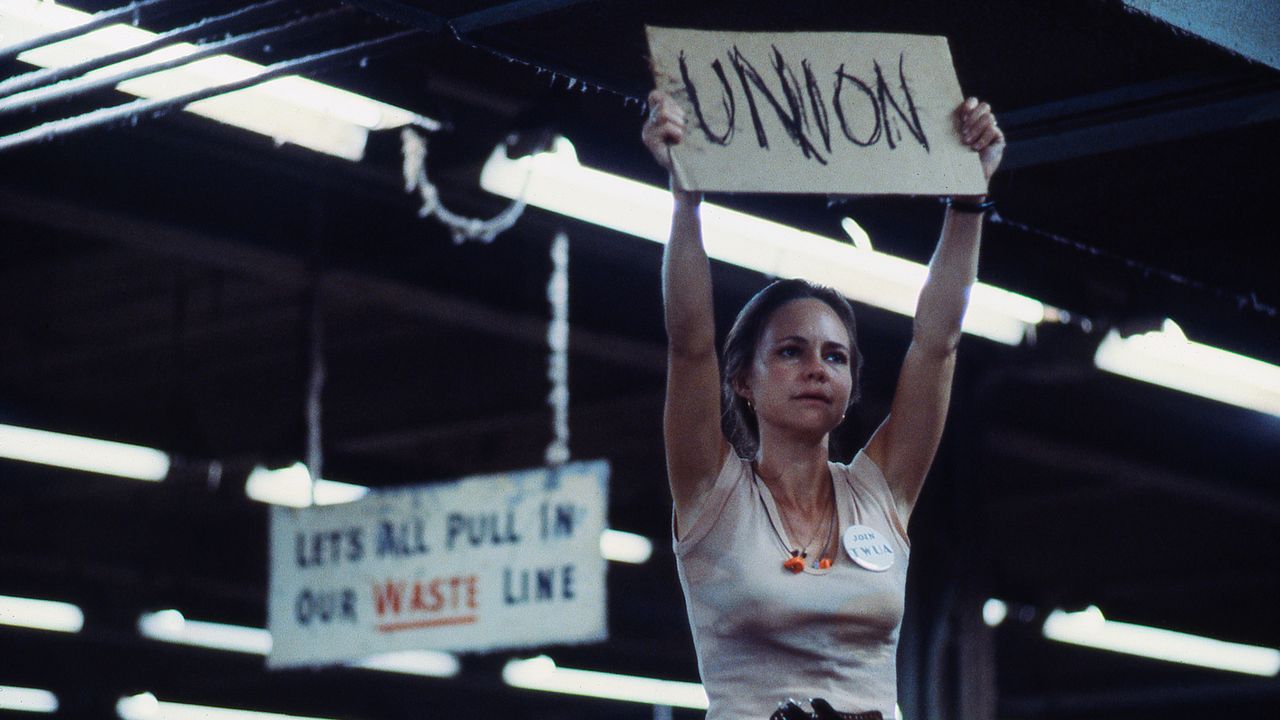
10. Norma Rae (marxist feminism/socialist feminism). The picture should really tell you all you need to know. Marxist and socialist feminism is very much focused on women's economic oppression and working-class women's issues. This film is about a working woman's struggle to build a union in the factory she's working in, so it is totally up the alley of marxist feminism.


Sunday, 8 August 2021

Disney, presently

 We didn't watch the movies that came after the renaissance period (ie. after Tarzan) until we were adults. Also, we never watched the dubbed versions anymore (because the quality had for some reason dropped). Hence these will be Disney, presently, not retrospectively. 


The Emperor's New Groove (2000)

It's okay. It's funny in places, the characters are fine. It's perfectly inoffensive apart for the slight homophobia that seemed to be a thing in early 2000's comedies. That does not mean that we don't have problems with it. 


Characters

Kuzco: The first self-aware main character of Disney. We're not big fans. But at least he has a narrative which is simple and memorable. He's occasionally quite humorous and David Spade is the reason for that.
Pacha: The voice actor is why we remember this character (had to look up the chacracter's name on Imdb). He's the voice of reason character, the sympathetic one and that's pretty much all we can say about him. If it wasn't for Goodman's voice, this character would be forgettable.
Yzma: A passable villain, but not nearly as entertaining as Ursula. In addition, you had Eartha Kitt voicing her; why the fuck did you not give her a song?! What a waste. 
Minor characters: Kronk is the best thing about this movie. He's a classic, funny renaissance sidekick character. Pacha's family was nothing to write home about, but also not terrible.


Story

In essence, it's a buddy roadtrip movie and because of that simplicity, it's passable. However, this is not a Disney film. It's Dreamworks: the fourth wall breaks, the narration and the infinite self-awareness that pokes fun at traditional storytelling. We're grumpy traditionalists when it comes to storytelling so it should not come as a surprise that the aforementioned rub us the wrong way. Especially since most Western animations after this are saturated with these tricks. It turned tiresome real quick. We're guessing that Pixar was the main influence on why Disney suddenly decided to change their whole MO. 

Miscellaneous 

All the character designs are very memorable, the background animation is serviceable but it's nothing compared to what Disney was capable of. Their previous movie also happened in a jungle and it looks incomparable. Also, we dont remember any of the music, not even the Elvis song in the beginning, and it's a problem they have yet to fix.

Tuesday, 1 June 2021

A case study in passive progressivism : Anne and His Dark Materials

There has been a trend going on in movies and tv-shows that started around 2010's - someone on the internet named it rather aptly - passive progressive. In short, this term means that a movie (or a show) pays lip service to some progressive values but when you delve into them a little deeper they turn out to be rather regressive. This trend has gotten more and more visible in recent years, since executives have decided to suck up to this demographic while not at all actually giving a fuck about these beliefs. I believe that I personally hate passive progressive - type of entertainment more than its conservative counterpart (which is pretty much PureFlix) because it is far more popular, has way bigger budget and is more insidious. I have taken two examples that exhibit a lot of passive progressive traits in them and that are based on books that end up being more progressive than the modern shows based on them (and the Anne - books were written in the early 20th century). Anne especially suffers for terrible loss of context - the show forces a modern worldview (meaning now) on books that were written over a hundred years ago. Also, I really dislike both series for exactly these reasons I am going to list down.


The first thing that caught my attention in these passive progressive series was the erasure of character arcs that women and girls have in the original work.  The examples I have perfectly encapsulate this aspect - especially His Dark Materials. Pullman's trilogy was one of my teenage favourites (they came out in the 90's and early 2000's) and it had some of the most intriguing female characters I had yet come across. And interestingly, both of them had quite definite character arcs - Lyra, the main character, starts off as this bratty, selfish liar but progresses into a thoughtful, less self-centred person and more interested in self-improvement. Mrs. Coulter, Lyra's mother, is a cruel person throughout the books but she gives up her fanatical beliefs and quest for power to save her daughter. In the show both of these arcs are gone like a puff of smoke. Lyra is turned into a girl-who-knows-better-than adults (I'm guessing to make her more special, even though she already is), she never makes a wrong choice and important emotional moments that were supposed to center around Lyra aren't about her in the show (like changing Tony Makarios' death to Billy Costa's death, hence it is all about the Costa's suffering and not Lyra facing death the first time). But ultimately the character change that pisses me off by far the most is Mrs. Coulter. In the book she was a cruel liar who felt hideous religiously induced shame about her daughter and hence at first did not care about her in the least. She abandoned Lyra as a baby and then when she met her again, she wanted to make Lyra into her obedient doll. Both she and Asriel (Lyra's dad) abandon Lyra right in front of Lyra's eyes at the end of the first book. In the show this is changed into Mrs. Coulter actually always wanting Lyra and being all "I'm a mother now so I can't go with Asriel to his conquest for power" instead of choosing not to go with Asriel because she wants to have her own quest for power like happened in the book. Also, in the show, neither of them know that Lyra is there, so that adds to not making Mrs. Coulter as cruel as she really was. Neither would Mrs. Coulter lift a fucking finger to help Scoresby unless it somehow benefitted her, unlike in the series. 


Anne is quite a known character in the literature world - she is an imaginative, thoroughly good person with quite a resentful personality as a child. The thing about really good people as characters is that unless you make them face some serious hardships, they will very often come across as rather boring and obnoxious characters that never really grow. This is exactly what happened in the Anne with an E - show. In the books Anne lost some very precious people to her and suffered a great deal and that also matured her as a person and it was easier as a reader to relate to her, since she wasn't just good without facing any tragedy. In the series, however, they had decided to make Anne both too virtuous and small-minded. With a competent script, this paradox could have served as a basis for good character - however, this is not what happened. Instead, in the show, Anne is ridiculously inconsistent - not because the series has purposefully created her so but just because they make her act that way (I guess to create extra drama). First she's some kind of miracle hero who rushes headlong into a burning building, and the next a petty malicious brat that looks down on the help. I guess the show creators thought that she had suffered enough by showing her past (which is there for shock value and for nothing else) because everything is handed to this girl on a goddamn silver platter. She doesn't have to work for anything, she doesn't have to lose or compromise something and she never faces any true loss. I do find it rather ironic that a show that so proudly proclaims to be progressive created a young black female character who did not exist in the book, simply to kill her off. So a black woman is killed instead of, you know, the old white guy who dies in the actual book this show claims to be based on. And in the end, her death didn't really mean anything to anybody, even her husband, who was fairly quickly hinted at getting together with the "unorthodox" Miss Stacey. Matthew was the first person who ever loved Anne, so his death was a devastating blow to her and also something that stayed with her the rest of her life and molded her as a person.   


The other major issue that I have in these shows is the strange adherence to traditional masculinity that didn't really exist in the original works. In Anne, they try to draw a contrast between the toxic masculinity of Billy Andrews of all people (making him the villain is the most ridiculous thing ever, if you've read the books) and Gilbert's more "feminist" masculinity which basically means "look, I'm standing up for women by speaking on their behalf". It doesn't really work, since both male characters ultimately look down on women, unintentional or not. What happened to the whole Gilbert can confidently wear an apron in public while the other boys couldn't because they were afraid of being perceived as ninnies? In the books Gilbert wasn't all that ambitious either, he was perfectly content to be a countryside doctor - in the show he wanted to become a world class doctor, curing every illness and study in some fancy school in Toronto. Also, the series' Gilbert is a two-timing prick. In His Dark Materials, however, come by far my biggest beef with this masculinity crap - in the books, Will was not a violent boy and in fact, avoided conflict to the last. There was also nobody in his life that he trusted, especially any men, which is why he took his mother to his former piano teacher, a woman. Will had this whole thing about being as invisible as possible so people would leave him and his mom alone. So, let's make this boy who wants to stay invisible, who dislikes violence and only uses it when forced, into a boxer. Because god forbid a black working-class boy play the fucking piano. Piano is far too emasculating, I guess. This is also disgustingly stereotypical - poor black boys don't play the piano, either because they are poor and black or because it is not masculine enough. Instead make this kid embody the most obvious stereotype of a poor black kid - a boxer. And again, Will only used violence rarely in the second book and in all of the situations his hand was forced - to save his mom from bullies (and as a warning to leave her alone) or to save his or Lyra's life. In fact, when he accidentally kills a man in the beginning of the book, this haunts him throughout both books. In the show, this event is barely discussed in a few scenes and then totally forgotten. 


Also, what's up with Anne and her gang constantly being obsessed about boys in the series? They're like 13-16 year old teens, why the hell do they care about boys so much? In the books, Anne never thought about boys, neither did she and her friends really talk about boys, until the third book when they went to college. I find it rather funny that a series that tries so hard to be relevant and progressive ends up being the one that conforms to society's views on women rather than the more conservative books. Benevolent sexism is rife in these series too - ie. women are better than they really are and men are worse than they really are. In Anne, Josie Pye is made into a victim, because that's what women ultimately are, instead of the petty narrow-minded person she really was. In His Dark Materials, Mrs. Coulter is softer in character instead of the cold-hearted villain she really was, because mothers can't be too cruel and Asriel is made into more of a bastard who would abandon both his child and love instead of Mrs. Coulter abandoning Lyra and leaving Asriel first because of the guilt and shame she felt. Religion also played a big part in these parents' narratives - Mrs. Coulter felt religious guilt and shame for the adultery and Lyra, its product, and Asriel was bitter towards the church and God for taking not only his possessions but his family from him as well. Hence, his whole quest for killing God and stuff, whereas Mrs. Coulter poured all her ambition to rising in the church, and thus they left their kid to her own devices to follow their own selfish objectives. The point was in the books, that both of these people were not good parents to their daughter, and realizing in the end that their daughter is the most important to them both and abandoning their ambitions to save their child. Asriel was, in the beginning, marginally the better parent, but even that played into shattering the illusion that Lyra had of him at the end of the first book, when he killed her best friend in front of her. And even when Mrs. Coulter does love Lyra by the third book, Lyra can never trust her, even if she does both love and hate her parents. 


A big elephant in the room that is missing from both series is, as I mentioned earlier, religion. Religion is pretty much fundamental to both stories - in His Dark Materials in a more critical way and in Anne more positive way. In His Dark Materials, the show's creators have turned the church into some kind of fascist structure rather than something that clearly emulates the medieval Catholic church. Neither is Mrs. Coulter a calculating religious fanatic or Asriel obsessed about killing God. Atheism and humanism, which were big themes in the original work, are hand-waved away and replaced with some vague notions of modern fascism and modern progressive sensibilities. I understand why these changes were made, of course, - Americans will not watch something that would portray atheism in any way positively. The US is a huge market for entertainment, much like China, so self-censorship in art is a frequent occurence. Anne, on the other hand, has clearly been influenced by its creators shallow liberal ideals, and I say shallow, because that is what they are - these ideals do not tie into any character narratives or stories, they are there just to bear witness how "progressive" the show is. Hence, Montgomery's rather unorthodox views on religion are never seen on screen in Anne and the wonderful humanist ideals that Montgomery imbued her religious beliefs with, are nowhere to be found in the series. Religion is truly almost completely irrelevant in Anne, with one giant exception, and this exception should piss you off even if you generally otherwise like the show - the First Nations residential schools. So, this show about white people in some rural village decided to have an episode about one of the most shameful acts in Canadian history -  the stealing of First Nations children, putting them in residential schools, erasing the childrens' culture and indoctrinating them in Christian faith. This awful history is purely there as a framing device to prove how incredibly righteous and good Anne is in this one episode to care about this one First Nations girl who escapes the shool, and then the issue and this girl, are completely ignored and left hanging for the rest of the show. The suffering of an entire group of people is reduced into a fucking footnote to glorify its white leads. White saviourism at its finest, indeed. And here is also the moment when religion is really presented in the show - it is bad and used for evil purposes. All the reverends, as well, that show up in the series are treated as ridiculous or super conservative. I myself am an ex-mormon, so I have no warm feelings towards organised religion, but Montgomery had far m0re nuanced views on religion than this show purports - she actually had quite a few atheist characters in her books and they were portrayed no differently from the believing characters. Montgomery also was not big on religious hypocrisy or religious authoritarianism. For her time, her beliefs were quite radical, and she was married to a pastor, to boot. Ultimately, both these shows are doing a disservice to religion and religious beliefs by ignoring their source materials criticism of said matters as well as their unorthodox and positive views on them.   


The final issue that I take in these shows has to do with how narratives and characters are built in them and the technical aspects that go with it. These series do not care about character narratives or themes - they ignore some super simple storytelling 101's that the original source material had and hence make both the characters and the story weaker. In His Dark Materials far too much time is wasted on minor characters (like the Costas and most of the witches) but then when there are minor characters that should be focused on they're cut short or cut from the story completely. One example of this is how Will's dad dies - in the book, his death follows a rather tragic pattern, his love and loyalty to his wife ends up being his demise and he is killed by a witch he rejected. In other words, he dies by an ally's hand. Some extra tragedy is brought on by the fact that Will and his father recognize each other a second before his death. Also, all three books end in tragedy of some form - in the first, Lyra is abandoned by her parents and Asriel kills her friend in front of her, the second ends in Grumman's tragic death by one on their side and the third book finishes with Lyra and Will separating through no choice of their own. Making Grumman's death all heroic, by protecting his son against an enemy soldier, goes against the tragic narrative these books have. Other major narrative issues I have are to do with the structure - showing the windows to other worlds before Will enters the picture means pretty much erasing the whole connection that Will had to the knife he receives. Will, the boy through whose eyes we first see a window to another world, inherits a knife that opens these windows. Also, the narrative theme of Will getting a weapon of violence when he dislikes violence is mostly gone from the show. Lyra, a girl who lies constantly, is the only one who can interpret the compass that tells nothing but truth. Since we saw the doorways to other worlds on the very first episode, Will is a boxer hence violence is already part of his life, and Lyra barely lies in the series, both of these narrative themes are gone. 


Show, don't tell is also very much missing in both these series. In Anne, rather than showing the deep friendship between Anne and Diana, they create pointless conflicts between the two. It does seem that writing forced conflict is the only way many modern shows and movies know to create tension. Montgomery often used nature to connect to her characters and their narratives but since there exists the obsession of Nolanising goddamn everything in the movie industry, of course we never see this nature and character connection in Anne, but rather, stuff that shouldn't be said by words is conveyed verbally and nothing is left to the imagination or for the viewer to interpret. The series has an opinion on the ready, so fuck those character narratives and any growth in character development, because our lead characters are already perfect and boring and always in the right. His Dark Materials commits this crime of telling instead of showing as well. For example, Lyra's parents meeting, when Mrs. Costa tells her about it, should have been shown as a flashback, since it is not in book form but in picture. Because we have never seen these characters interact, it would make perfect sense to see them together and build some chemistry between them before we see them meet again at the end of the first season. This never happens and instead we get a completely forgettable scene of Ma Costa explaining Lyra's parents' meeting to her. The second season of His Dark Materials has some similar pacing problems that the Two Towers film version has - it drags terribly in the beginning but then the end is far too rushed and characters that needed more focus, like Grumman and Scoresby and their relationship is left to the wayside. Instead the onus shifts to Mrs. Coulter (who was a minor character in the second book) and the show's weird obsession of trying to make her a modern "feminist" character while simultaneously taking from her the only thing that was feminist about her - her narrative arc.


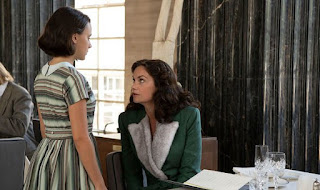
Minor grumbles include that both versions of His Dark Materials (the movie Golden Compass included) had looming behind them more popular and famous fantasy series and it shows - the BBC's series comes off as a discount Game of Thrones. The wonderful cast is also wasted in both shows, especially Ruth Wilson, who was born to play Mrs. Coulter, much like Emma Thompson was born to play Beatrice in Much Ado About Nothing. Both of these series have kinda convinced me that the only form stories that are about children can work in, is animation. Because kids are simply not mature enough to show such deep emotion that is expected from good actors and it shows in these series as well - the children's storylines and character arcs are simplified or erased. This is especially detrimental to series, since they run longer than movies. This ties pretty neatly into what we wrote in an earlier blog post about the modern trend of moral film criticism and how we dislike it because it limits the scope of character narratives and how stories are told (eg. no metaphorical stories, since everything is taken literally). These two shows in their passive progressive preaching are good examples of this trend of pandering to certain views and beliefs instead of focusing on creating compelling and fulfilling narratives and stories. All art is political, I know, but that doesn't mean you have to be so damn hollow and unimaginative about it - otherwise your art might just end up on the same level of substance as PureFlix. And what self-respecting artist wants that? 


Saturday, 28 November 2020

Our utopia

 As we have expressed previously, we detest critiquing films purely based on their ideological content. Nevertheless, we thought we'd try our hand at moralism. Some of these movies we will most likely never watch again, but all of them are in essence personal stories (which we love) and never try to cram their ideology down the viewers' throat (which we hate) and all of them left an enormous impression on us. These are in no particular order as we are unable to rate which of our beliefs is the most important.


1. The Human Condition (1959 - 1961) - Anti-imperialism, anti-militarism & anti-authority

Yes, yes. It's a trilogy, but you can't pick just one! Unsurprisingly we couldn't find a movie that's anti-imperialist or anti-military from Hollywood. These films portray convincingly that blind allegiance to authority can lead the masses to commit or accept the most horrific actions. The films are very critical of the hierarchy and purpose of the military in general. These are the only movies we have seen that criticise so fundamentally its own country's history of imperialism and militarism. They are a heavy watch, but definitely a must-see for everyone.


2. The Eternal Road (2017) - Pacifism

This is the one Finnish movie that truly spoke to us. We have a few others we could recommend from Finnish cinema, but this is the one for us. Unlike in The Human Condition, which is against violence and war, The Eternal Road is decidedly for pacifism, non-violent resistance and peaceful living. This comes across because the main character in the previous  has somewhat a regressive arc and in the latter the main character never wavers in his principles.


3. Captain Fantastic (2016) - Libertarian socialism

The movie's conclusion is basically a compromise between the main character's unyielding utopian ideals and reality, which is the understanding that one can retain one's ideals while being part of a larger society. 


4. The Apartment (1960) - Anti-capitalism & anti-corporatism

The Apartment shows the hollowness of the corporate world, that you're nothing but a cog in a machine and everything is commodified, especially lower-class women. And the only way to avoid that is to leave. We of course go a step futher and say burn it all down.


5. On the Waterfront (1954) - Pro-union & Christian socialism

We don't buy in to the divine aspects of Christianity, but admittedly Jesus had some pretty rad ideas.We endorse the insights that unions are not really unions (or at least are not effective) unless workers are the ones who get to represent themselves and that for unions to prevail you need solidarity between workers.


6. Free State of Jones (2016) - Class struggle, solidarity & democracy

We like the idea that economic oppression is what can unite people across all human experience and bring about meaningful change and that it's nigh impossible to achieve that without democracy. It additionally shows that democracy is not democracy unless everyone is equal and has equal rights before the law. We recommend you also read up on Fred Hampton and The Black Panthers, The Young Lords and The Young Patriots in Chicago. It might as well be this story but with a black lead. 


7. Ikiru (1952) - Government bureucracy & value of community

Because we believe in democratic parlamentarism we also have to accept that bureucracy is necessary. But what kind of bureucracy it should be is what this film addresses. Bureucracy should be transparent, as simple as possible and work for the benefit of the citizens. People from the community should be the ones who work in the bureucracy for it to be effecive.


8. Princess Mononoke (1997) - Eco-socialism & environmentalism

Socialism that is based on the same industrial model as capitalism leads to the same conclusion: the exploitation and destruction of nature. If we didn't love entertainment so goddamn much, we would be borderline Luddites. Much like this film. 


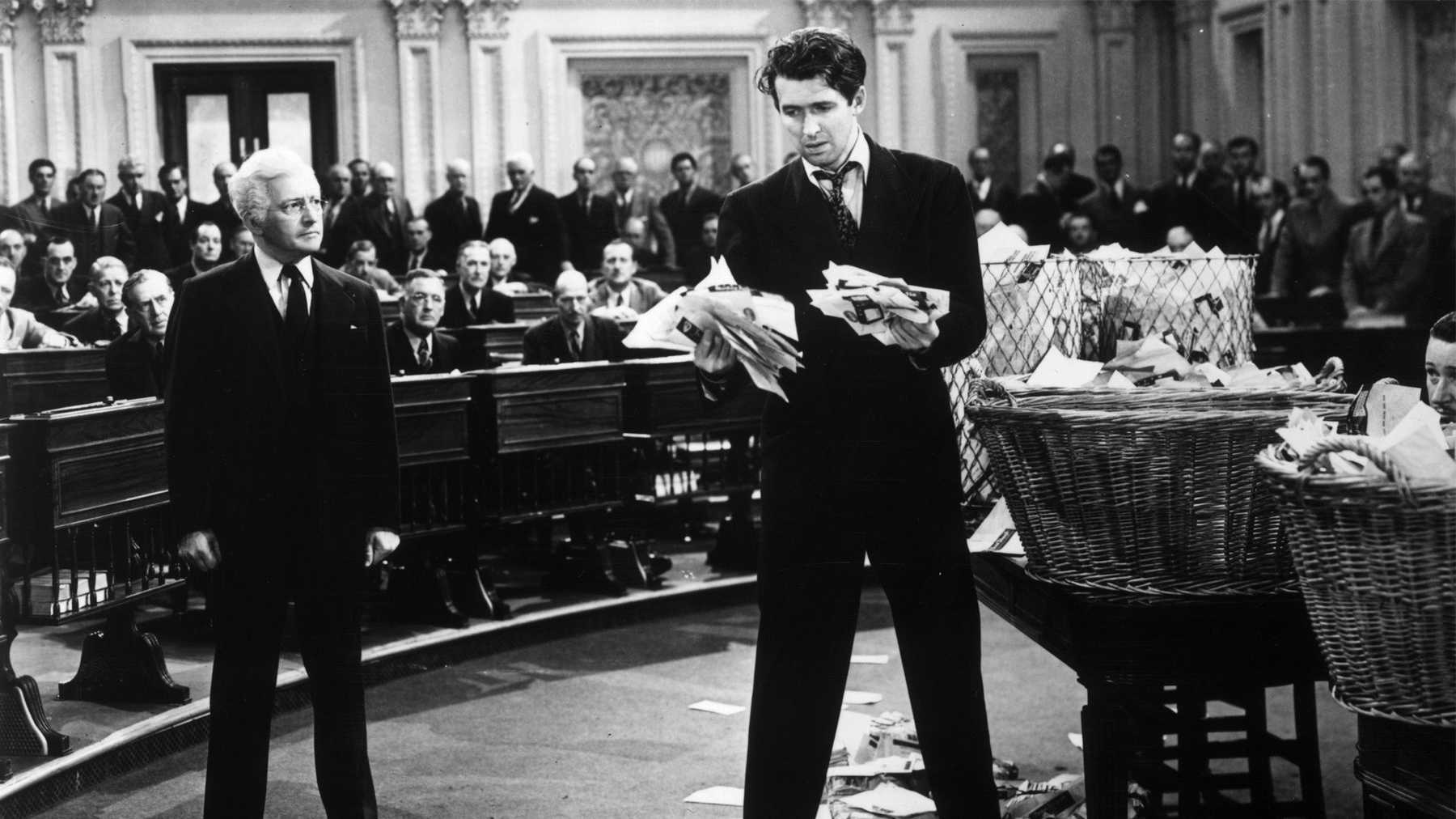
9. Mr. Smith Goes to Washington (1939) - Political corruption & parlamentarism

This movie essentially depicts what we think that political corruption often is; the merging of corporate (private) and governmental (public) power and influence. It also shows that this corruption makes parlamentarism impossible as your elected officials do not represent you, the voter, but rather monied private interests.


10. Silence (2016) - Spirituality & religious beliefs

Scorsese has always expertly portrayed his approach to faith and religion, particulary to Christianity. And since we have been raised Christian, we share that worldview and feel affinity with how Scorsese presents the doubt in your own faith and religion. While we personally no longer believe in deities or divinity, we have no desire to deny that spirituality and personal religious beliefs can bring comfort and meaning to others. However, we can never say the same about organised religion.


11. Nausicaä of the Valley of the Wind (1984) - Humanism

Humanism for us doesn't mean that you simply extend your sympathies to other human beings but to all existence and life. Since we eat industrially produced animal products, we are hypocrites in our humanism as much as we are in all the other ideals. That's why this post is called "our utopia". But that's also part of humanism, that everyone errs. One big reason why we picked Nausicaä, although read the manga as well.


12. Dead Man Walking (1995) - Anti-death penalty & prisoner reformation

We are adamantly against the death penalty in any instance. We can't even comprehend how any American can sleep knowing that 4 % of death row inmates are or have been innocent of the crime they have been convicted for. We do not believe in "an eye for an eye" but we understand the impulse, we have that too. It doesn't mean we or the state should act on it. Humanity in general should strive for better, and that's where prisoner reformation comes in. It's a heavy and complex subject and it would be impossible to convey all we think about it in a few sentences. It has to do with how the society is formed, what laws are decreed (and for whom) and enacted and how the society participates in preventing marginalisation of people.


13. Portrait of a Lady on Fire (2019) - Feminism & equality

Even though this is a historical piece, the subject matter makes it relevant. Yes, there isn't as much class analysis, but that's kind of not the point. The point is that no matter your social standing, if you are a woman your path has already been made. It would do you well to remeber though, that neither of the women have their own property or money, and that the artist has to paint under her father's name to gain any independence. 


We have a few honourable mentions that we must include. If Beale Street Could Talk (2018, racism & class), Wag the Dog (1997, media & manufacturing consent), Norma Rae (1979, pro-union & feminist socialism), The Mission (1986, spirituality & religious beliefs, not the Christian imperialism), Arrival (2016, anti-militarism & diplomacy), The Bad Sleep Well (1960, anti-capitalism & anti-corruption), Tokyo Godfathers (2003, humanism). Since we chose to only include films we could not take our Bible for pacifist philosophy, which is Trigun (1998) obviously.

Friday, 23 October 2020

Pick of the month

 Noir (2001)


It seems we're still not over anime. But honestly, this show deserves way more recognition than what it currently has. Surely one of the reasons for that is because it's purely about women and the only romantic undertones are between the leads without any sexy business. Its Imdb rating is criminally low. This show surpasses Cowboy Bebop by a mile and a half. Even the soundtrack is much better (and we love Yoko Kanno). However, Noir is Kajiura at her best. The visual style is stunning all around, particularly the use of shadows. Perhaps it has not garnered as much attention as other shows as well because men are completely irrelevant to the story.

This show is a slow burner so one does require patience in the beginning. It will pay off though, we promise. If you like character driven narratives with cool action, this is the show for you. Additionally, it's not bleak as fuck.